

FIRES originating from e-bikes and e-scooters surged to a new peak in the past year, according to an investigation, prompting cautions for riders regarding purchases from online platforms.
Data from fire departments, as uncovered by the Press Association, showed a total of 432 e-bike fires were reported throughout the UK in 2025. This marks a 38% increase from the previous year’s 313 incidents and is more than five times the 84 incidents seen in 2021.
E-scooter fires numbered 147 last year, a 20% uptick from 123 in 2024, with the figure at 88 in 2021. These fires are frequently linked to issues with batteries, conversion kits, or chargers.
Items bought from online platforms have exhibited a higher likelihood of malfunction compared to those from established retailers due to lower regulation levels, according to findings.
Nick Bailey from BatteryIQ, a provider of e-bike battery safety monitoring systems, highlighted that the e-bikes and e-scooters involved in fires are typically low-cost products from online platforms with minimal quality checks. Bailey warned about the emergence of a black market for do-it-yourself and counterfeit batteries, particularly for delivery riders, constructed using cells from discarded vape devices.
The Press Association submitted Freedom of Information requests to all 49 fire services across the UK to gather data on e-bike and e-scooter fires annually from 2021 to 2025. Of these, 37 services provided comparable data. The London Fire Brigade (LFB) recorded the highest number of e-bike and e-scooter fires last year, with 171 and 35 incidents, respectively.
Nottinghamshire documented the most e-bike fires outside London, with 30 cases, followed by Greater Manchester with 13 incidents, and Avon Fire and Rescue Service with 10 incidents.
Outside London, Greater Manchester witnessed the most e-scooter fires (13), ahead of Avon Fire and Rescue Service (10). Fires involving lithium batteries used in e-bikes and e-scooters are known to spread rapidly and produce hazardous fumes.
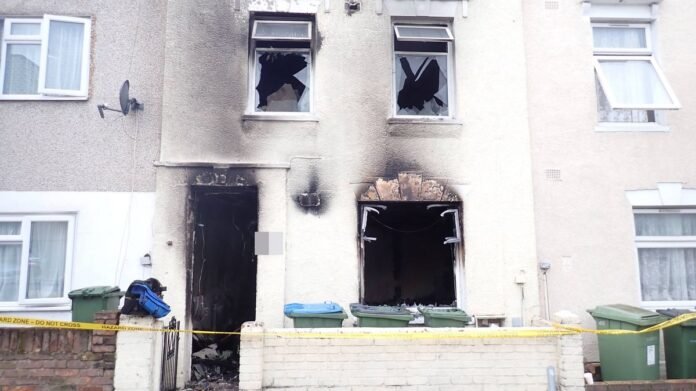
Tragically, 30-year-old Eden Abera Siem passed away in a hospital after being rescued from a fire, likely caused by a faulty e-bike battery, at her residence in Wood Green, north London, in June last year. Lesley Rudd, chief executive of Electrical Safety First, expressed deep concern over the escalating issue of fires triggered by substandard e-bike and e-scooter batteries, emphasizing the urgent need for intervention.
The Government recently introduced three consultations outlining plans to enhance product safety in the UK, including proposals to hold online platforms legally responsible for preventing the sale of hazardous products on their platforms.
Spencer Sutcliff, LFB’s deputy commissioner, voiced significant apprehension about e-bike and e-scooter fires and their destructive consequences. The ban on privately-owned e-scooters from Transport for London (TfL) networks, due to fire risks, was extended to non-foldable e-bikes across most TfL services following an incident at Rayners Lane Tube station.
Although private e-scooters are prohibited in public spaces nationwide, illegal usage remains prevalent in urban areas. Trials for rental e-scooters on roads have been ongoing in various English towns and cities since July 2020. E-bike motors are mandated to cease functioning at 15.5mph under UK law, yet authorities are discovering many cases where these motors have been altered to reach higher speeds.
Sue Davies, head of consumer rights policy at Which?, highlighted the increasing presence of unsafe products on online platforms, including e-bikes and e-scooters, which pose grave risks to consumers and undermine compliant businesses. Davies stressed the necessity for robust regulations and enforcement to shield consumers from harm and reduce the likelihood of fires and other dangers.