

Fears of a potential World War Three have risen after a collaborative military strike by the US and Israel aimed at impeding Iran’s nuclear program. This has caused concern beyond the Middle East, with individuals in Europe finding themselves caught in the midst of escalating tensions. Reports have emerged of people stranded in foreign countries witnessing bombings near their residences, prompting some to take precautions like boarding up windows.
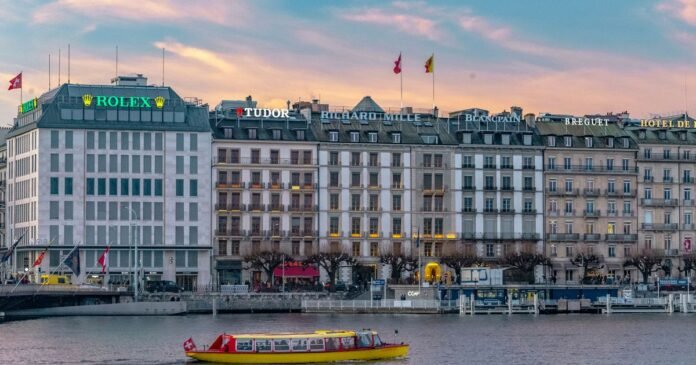
In search of a sense of security, a review by the Mirror has identified European countries that could offer safety in the event of a global conflict. Switzerland stands out as a longstanding neutral country, refraining from involvement in global conflicts for over two centuries officially and even longer unofficially. Despite controversial moments in its history, Switzerland’s tradition of neutrality makes it an improbable participant in a hypothetical World War Three.
Following Switzerland, Ireland boasts a lengthy period of neutrality spanning more than 85 years. This stance endured through challenging times, including World War Two and the establishment of international security alliances like NATO. With NATO likely playing a significant role in any future conflict, Ireland’s non-membership position suggests it is unlikely to be a target.
Austria, like Switzerland and Ireland, has a historical tradition of neutrality dating back to 1955. This constitutional neutrality has shielded the country from joining NATO and potentially being drawn into conflict. However, Austria’s proximity to Ukraine, a potential hotspot for conflict with Russia, poses a geographical vulnerability on its eastern border.
Denmark, a member of NATO, maintains a robust defense force and strategic positioning, making it a secure ally within the organization in times of war. The country’s military capabilities, including a well-trained armed forces contingent and control over strategic territories like Greenland, enhance its defensive strength.
Portugal, as a founding member of NATO, occupies a favorable position in western Europe connected to Spain. In the event of a global conflict, Portugal is likely to align with NATO but is geographically isolated from direct attacks, requiring potential aggressors to traverse significant distances across Europe. Additionally, Portugal’s possession of the Azores, an isolated island chain, could serve as a strategic evacuation point in times of crisis.