
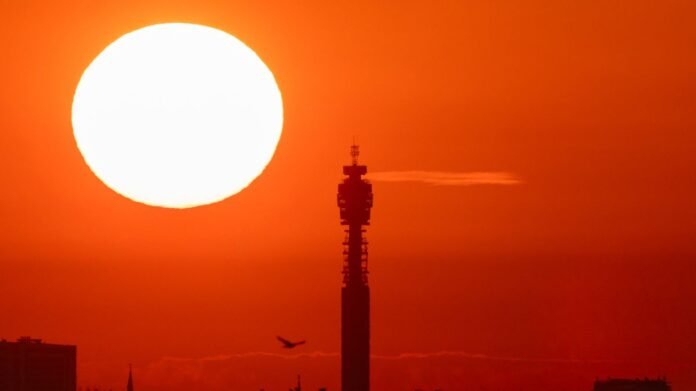

An event focusing on extreme heat had to be called off due to the very same extreme heat conditions, in a twist that did not escape the event organizers’ notice. The conference, titled ‘Extreme Heat: Improving Governance and Strengthening Action Around the World,’ was set to be held at the Shaw Library at the London School of Economics (LSE) as part of Climate Action Week. However, the Met Office issued a red weather warning covering a significant area of southern England, including London, prompting the cancellation.
Hosted by LSE’s Grantham Research Institute and the Zurich Climate Resilience Alliance, the conference aimed to address the urgent need for enhanced global governance on extreme heat. It intended to delve into how various countries are tackling extreme heat through governance, policies, and adaptation strategies while also highlighting the obstacles they encounter.
The cancellation coincided with numerous schools opting to fully or partially shut down due to the impending extreme weather conditions. A “heat dome” settling over western Europe is anticipated to bring temperatures nearing 40°C, surpassing the UK’s June heat record set in Hampshire back in 1976.
The Zurich Climate Resilience Alliance announced the cancellation on social media, citing the lack of cooling mechanisms in the event venue and the potential health risks posed by the oppressive indoor conditions and hot commutes. The alliance emphasized the importance of global mitigation efforts, local heat governance, and response plans in mitigating the impacts of extreme heat.
Professor Fredi Otto from Imperial College London highlighted that as long as emissions persist, heatwaves will become more frequent and intense. She stressed that the current infrastructure and economy are ill-equipped to handle these extreme conditions, emphasizing the need for proactive measures.
Dr. David Dawson from the University of Leeds echoed similar sentiments, warning that heatwaves are projected to increase in frequency and duration. Studies from the Met Office indicate a high probability of escalating global temperatures in the coming years, underscoring the urgency for climate action to prevent severe climate consequences like ecosystem destruction, species extinction, extreme weather events, and rising sea levels.