
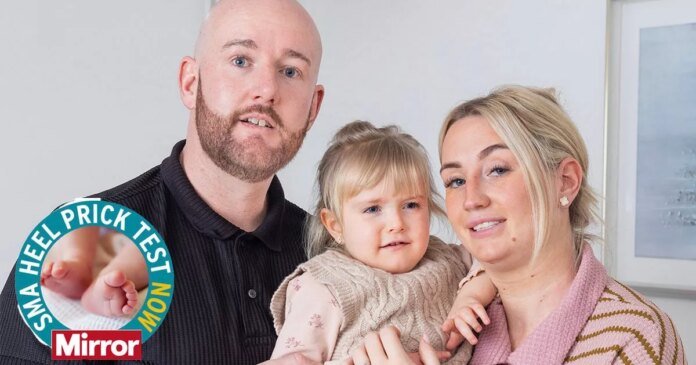

The father of a child who has been severely disabled by a degenerative muscle condition has criticized the government for its decisions. The campaign by Mirror is advocating for the UK to adopt the practice of screening newborns for spinal muscular atrophy (SMA), a genetic disorder that affects muscle strength. Ophelia-May Davies, a three-year-old, was not diagnosed with SMA until after her second birthday, leading to irreversible nerve damage that has impacted her ability to walk.
Jesy Nelson, a former member of the music group Little Mix, recently revealed that her twins have been diagnosed with the severe Type 1 form of SMA, which greatly affects their mobility. Ophelia, on the other hand, has been identified with the Type 2 form of the condition, with a projected lifespan of around 20 years, although she still struggles with basic motor functions.
Expressing his frustration, Warren, aged 36, highlighted the need for the NHS to include SMA screening for all newborns, emphasizing the cost-effectiveness of early detection compared to the expenses of managing SMA in affected children. Delayed diagnosis of Type 1 SMA babies can lead to complex medical interventions, including tube feeding and constant monitoring to prevent breathing issues.
Ophelia’s parents, Warren and Rhiannon, from Aberdare, South Wales, recounted their journey of discovering their daughter’s condition, which was only confirmed after persistent requests for a second opinion. The lack of early screening for SMA has resulted in families like theirs missing out on timely treatment options that could prevent severe disabilities.
Despite mounting evidence supporting the benefits of newborn SMA screening, the UK government has not committed to a nationwide rollout, opting instead for a pilot program recommended by the UK National Screening Committee. This delay means that infants in certain regions may not benefit from early detection until at least 2027.
In contrast, Scotland has taken proactive steps to implement SMA testing for all newborns starting this spring. While there have been advancements in curative treatments for SMA, such as Zolgesma, which can potentially halt disease progression, these options are often inaccessible to children diagnosed late, like Ophelia.
To support Ophelia’s ongoing care and therapy needs, Warren and Rhiannon have initiated a GoFundMe campaign due to limited NHS resources. Despite the challenges, they remain dedicated to providing the best possible care for Ophelia and are hopeful for advancements in SMA treatments in the future.
The Welsh government has stated that it will only introduce SMA screening in newborn heel prick tests upon recommendation from the UK NSC, underscoring its commitment to following expert advice to improve rare condition diagnosis within the healthcare system.