
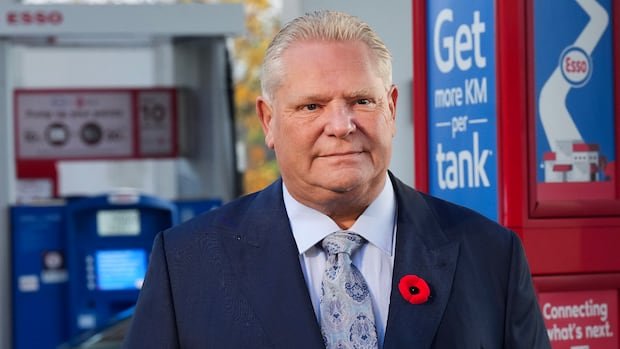

Ontario Premier Doug Ford has formally requested Prime Minister Mark Carney to prolong the temporary suspension of the federal gas excise tax until the end of this year. Ford emphasized the inopportune timing of reinstating the tax amidst current economic challenges faced by Canadians, such as escalating housing costs and grocery prices.
Initially implemented by Carney in April, the 10-cent excise tax on gasoline and four-cent tax on diesel were temporarily waived until Sept. 7 to alleviate short-term financial strains caused by surging global oil prices due to geopolitical tensions. This measure, estimated to cost $2.4 billion, aimed to support Canadians during the challenging period.
In a notable move in 2022, the Ford administration introduced its own short-term fuel tax relief, reducing taxes on gas and diesel by 5.7 cents and 5.3 cents per liter, respectively. This adjustment brought the provincial tax rates on both fuels to a harmonized nine cents per liter, resulting in approximately $115 in annual savings for households, as outlined in the 2026 provincial budget.
Ford’s correspondence to Carney proposed extending the federal fuel tax suspension until Jan. 1, suggesting that the federal government mirror Ontario’s commitment to making the tax relief permanent to further alleviate financial burdens on residents.
Despite historic tensions between Ford and Conservative Opposition Leader Pierre Poilievre, both leaders found common ground in advocating for the extension of the excise tax holiday until the year-end, a stance that has been supported by federal Conservatives. Poilievre additionally urged the government to eliminate the GST on gas and diesel until Dec. 31 and permanently discard clean fuel regulations to ease financial pressures on Canadians.
While Finance Minister François-Philippe Champagne’s spokesperson refrained from confirming an extension of the tax holiday, he reiterated the Liberal government’s dedication to enhancing affordability and collaborating with provinces to address economic challenges amid the current global economic climate.