
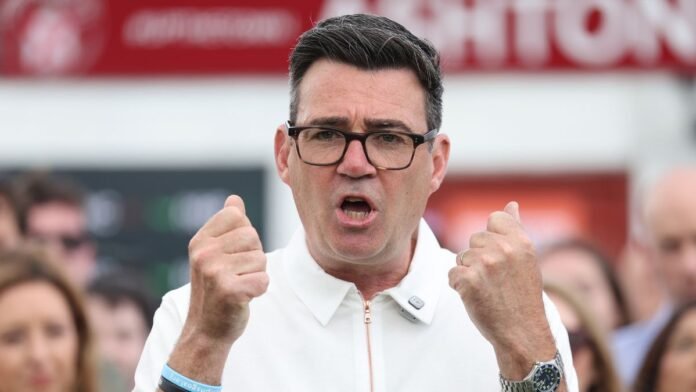

Andy Burnham is set to make a comeback to the House of Commons after almost ten years since his resignation as an MP. The former Mayor of Greater Manchester will be sworn in as the newest MP for Makerfield on Monday following a decisive victory over Nigel Farage’s Reform party in a crucial by-election.
During a celebratory rally in the North West constituency, Burnham emphasized the need for change after decades of ineffective policies for the region. He expressed optimism about the opportunity to improve the lives of people and communities, bringing a sense of hope back into politics.
Following his win, Burnham’s close ally, former Transport Secretary Louise Haigh, urged Labour leader Keir Starmer to reflect on the election outcome and consider a smooth transition of leadership to avoid a contentious contest. Speculation surrounds the potential for Burnham to take over as Prime Minister, with discussions of a possible orderly handover of power from the current leadership.
However, any transition to Burnham’s leadership would require the absence of other contenders vying for the top position. Former Health Secretary Wes Streeting has indicated his readiness to challenge for leadership, advocating for substantive debates within the party on its future direction.
In the event of a leadership challenge, Starmer’s opponents could trigger a showdown if he refuses to step down voluntarily. This could lead to a prolonged internal strife within Labour, reminiscent of the turmoil faced by the Conservative party in the past. Burnham’s team aims to navigate these potential conflicts to ensure a smooth and timely leadership transition.
If a leadership contest ensues, candidates must secure support from a significant portion of Labour MPs to proceed. The National Executive Committee (NEC) would oversee the timing and procedures of the contest, likely extending through the summer with engagements with party members and unions.
The outcome of the leadership battle, if initiated, could be decided before Labour’s annual conference in September. The process involves multiple rounds of voting until a candidate garners more than 50% of first preferences. Suggestions have been made to streamline the selection process, potentially bypassing party members’ input in favor of a decision made solely by MPs, pending approval from the party’s governing body.