
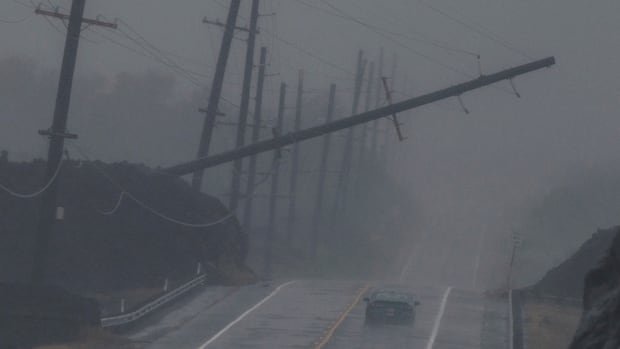

Hurricane Lala weakened to a tropical storm on Sunday as it bypassed Hawaii without making landfall. Despite this, the storm brought strong winds and heavy rain, accumulating nearly one meter of rainfall in some areas and causing torrents of water to rush down mountain slopes.
A rescue operation, involving Civil Defence, the National Guard, and a coast guard helicopter, was initiated after flash floods reportedly swept several homes off their foundations in Na’alehu and Wai’ohinu, coastal communities near the southern tip of the Big Island.
Hawaii County Mayor Kimo Alameda described the challenges faced by rescue teams due to rushing water, debris, boulders on roads, and darkness during the early hours of Sunday. Tragically, one person lost their life in a vehicle accident in the South Point area of the Big Island, as confirmed by Gov. Josh Green.
Honolulu experienced the worst of the storm on Sunday morning as tropical storm conditions spread westward across the island chain. The Honolulu Fire Department responded to numerous weather-related incidents, including reports of downed trees, blown roofs, downed power lines, arcing-wire situations, and a swimmer rescue.
While a flash flood warning remained in effect for much of the state, the U.S. National Hurricane Center downgraded the Big Island to a flood advisory on Sunday. Meteorologist Stephen Parker highlighted the threats posed by heavy rain, mudslides, downed trees, active flooding, and downed power lines.
With over 200,000 homes and businesses without power by mid-morning, the majority of power customers on the Big Island were affected. Three hospitals were operating on generator power due to the outages caused by the storm.
As Lala skirted Hawaii, powerful waves battered the coastlines, with the storm’s winds intensifying as it passed by. The threat of destructive flooding and wildfires loomed over Maui, Molokai, Lanai, Kahoolawe, Oahu, Kauai, and Niihau due to the tropical storm warnings in place.
Lala, with sustained winds of 100 km/h, was located approximately 220 kilometers west of Honolulu at 11 a.m. local time, according to the National Hurricane Center. The storm was moving west-northwest at about 28 km/h and was expected to maintain its current intensity through Monday.
Significant rainfall, especially on higher ground areas like Mauna Kea, caused concerns of mudslides in regions where many residents live in vulnerable housing. Precautionary measures were taken, including opening shelters, cancelling events, and advising ranchers to secure their cattle in safer locations.
The impact of the storm was felt across various communities, with reports of severe damage at the Punalu’u Bake Shop on the Big Island and power outages affecting residents like Kate McLellan on Oahu’s North Shore. The state’s response and communication during the storm were commended for being more efficient than in previous events, with proactive measures such as tree trimming and stream maintenance observed before the storm’s arrival.