
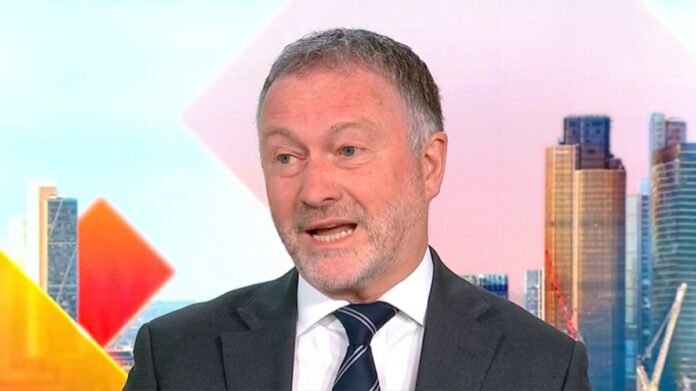

A government official has criticized members of the Labour party who went against party instructions and voted for an inquiry into Keir Starmer regarding the Peter Mandelson controversy.
Steve Reed criticized a group of 15 Labour backbenchers who supported a Conservative proposal for an investigation by the Privileges Committee. He referred to them as the “usual suspects” and highlighted that the majority of MPs voted in alignment. Reed emphasized the importance of focusing on upcoming renters’ rights reforms rather than being sidetracked by dissenting members.
The motion to refer Keir Starmer to the committee, similar to the investigation into Boris Johnson over Partygate, was defeated by MPs on Tuesday evening. Kemi Badenoch faced accusations of political maneuvering for initiating the vote, which the Government won with a significant majority of 112 votes.
In addition to the 15 dissenting MPs, 53 Labour members abstained from voting, with reasons such as absence or illness possibly contributing to their non-participation. Reed commended the solidarity among the majority of Labour MPs who supported the government, while criticizing the Tories for engaging in political gamesmanship.
Reed emphasized the unity and determination within the Labour Parliamentary party, noting that scrutiny on the issue was appropriate through the release of pertinent documents and committee investigations. He stressed the importance of addressing issues like the cost of living, which resonated with voters during recent interactions.
Cabinet Minister Darren Jones criticized Conservative leader Kemi Badenoch for what he termed as “ranting incoherence” and condemned the vote as a politically motivated spectacle. He accused the opposition of attempting to divert attention from critical matters affecting constituents and the nation.
Several Labour MPs expressed frustration at being instructed to oppose the motion. They highlighted the importance of transparency in governance and the need for MPs to uphold integrity irrespective of political affiliations. The sentiment among some MPs was that the motion was a deliberate attempt to embarrass the Prime Minister rather than a genuine pursuit of accountability.