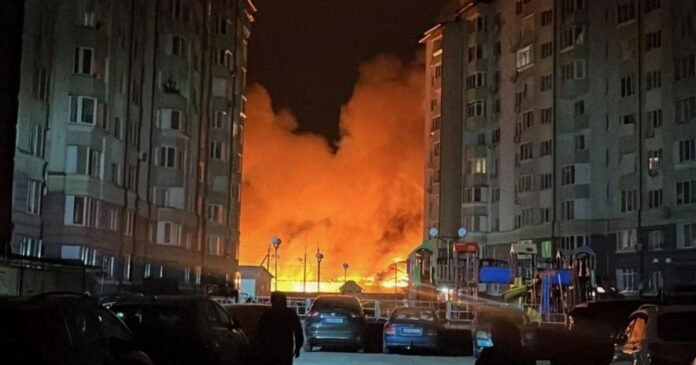

NATO fighter jets were deployed in response to a severe missile and drone attack by Vladimir Putin’s forces in Ukraine. The onslaught caused electricity outages and heating cuts in various regions, with Russia launching 51 missiles and 653 strike drones targeting civilian infrastructure as temperatures dropped below zero. Notably, a major thermal power plant in Kryvyi Rih, Volodymr Zelensky’s birthplace, was directly hit, leading to significant damage to homes.
Key facilities across Ukraine, including the Bila Tserkva power plant in Kyiv, the railway station in Fastiv, and Vyshhorod, suffered critical damage during the intense attacks, which also included the use of lethal hypersonic Kinzhals. Ukrainian air defenses successfully intercepted 585 drones, 29 cruise missiles, and one ballistic missile, underscoring the scale of the assault.
In response to the escalating conflict, Poland mobilized its military forces and scrambled warplanes as a precautionary measure to safeguard its airspace from potential threats posed by Russian ballistic and cruise missiles. Meanwhile, discussions between the US and Ukraine aimed at reaching a peace agreement continued, despite Putin’s persistent focus on weakening Ukraine.
Tragically, a 12-year-old boy lost his life in Dnipro due to the Russian strikes, highlighting the devastating impact on civilians. Ukrainian forces retaliated by targeting a crucial oil refinery in Russia without causing harm to non-combatants. The Ryazan refinery, vital to Moscow’s oil supply, was engulfed in flames following the Ukrainian strike.
As the conflict rages on, Ukraine’s military leaders remain resolute in their commitment to defending against Russian aggression. General Oleksandr Syrskyi acknowledged the challenges faced by the country but expressed confidence in the support of international allies in their ongoing battle against the aggressor.