
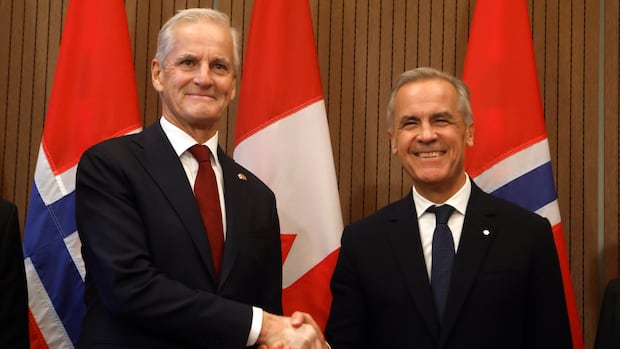

The Prime Minister of Norway has stated that the threats posed by Russia form part of the current security landscape and must be taken with utmost seriousness.
In a conversation with CBC’s Power & Politics, Norwegian Prime Minister Jonas Gahr Støre expressed to host David Cochrane that “we are prepared, but not afraid” regarding a potential Russian invasion.
He emphasized that the threat is “real” and needs to be monitored “very carefully,” particularly by nations located near the Russian frontier, including Canada.
“NATO intelligence agencies are indicating this threat. It is genuine. It’s occurring,” Støre noted.
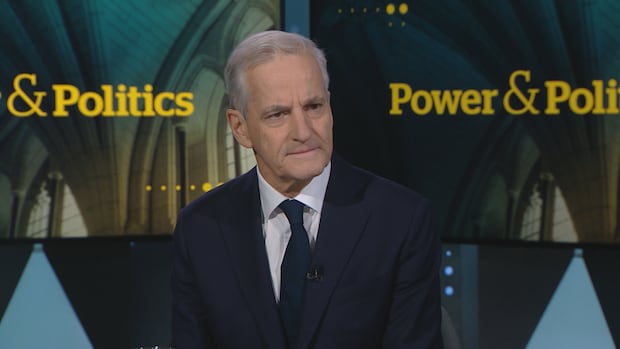
Norwegian Prime Minister Jonas Gahr Støre informs Power & Politics that the threat from Russia to neighboring countries, including Canada, is ‘real’ and warrants careful attention from NATO allies.
This discussion about threats emerged this week following a caution from Polish Prime Minister Donald Tusk regarding Russia’s plans for hybrid attacks on NATO territories.
In light of these dangers, the Norwegian Prime Minister advocates for regional alliances, acknowledging Canada’s recent initiative to pursue membership in the U.K.-led Joint Expeditionary Force (JEF), a coalition of select NATO nations aimed at rapid crisis response.
The JEF was originally established by the U.K., the Netherlands, and the Nordic and Baltic nations. However, Støre highlighted the necessity of closer dialogue with countries that “share challenges and security risks,” such as Poland, Germany, Belgium, and Canada.
-
Carney touts Arctic alliance with Norway during PM’s visit to Ottawa, amid Russia threat
-
Analysis
Russia is rattling NATO’s nerves, but how far will Moscow go?
Støre remarked that the JEF is beneficial in scenarios where challenges may exceed a country’s capacity or do not meet the scale of Article 5 — the NATO clause mandating that allies defend any member that is attacked. He shared with Power & Politics that NATO partners are engaged in a “sophisticated debate” regarding the criteria for activating Article 5.
As Russia appears to be struggling to achieve its strategic aims in Ukraine, it may be looking to test the resolve of Ukraine’s allies, according to Støre.
Recent events in Europe this summer have heightened concerns among NATO partners.
Authorities in Germany attributed a drone attack at an airport in central Germany in August to Russia, while last week, Bulgarian officials reported an investigation into a fire at a munitions depot operated by arms manufacturer EMCO, whose weapons are utilized in Ukraine.
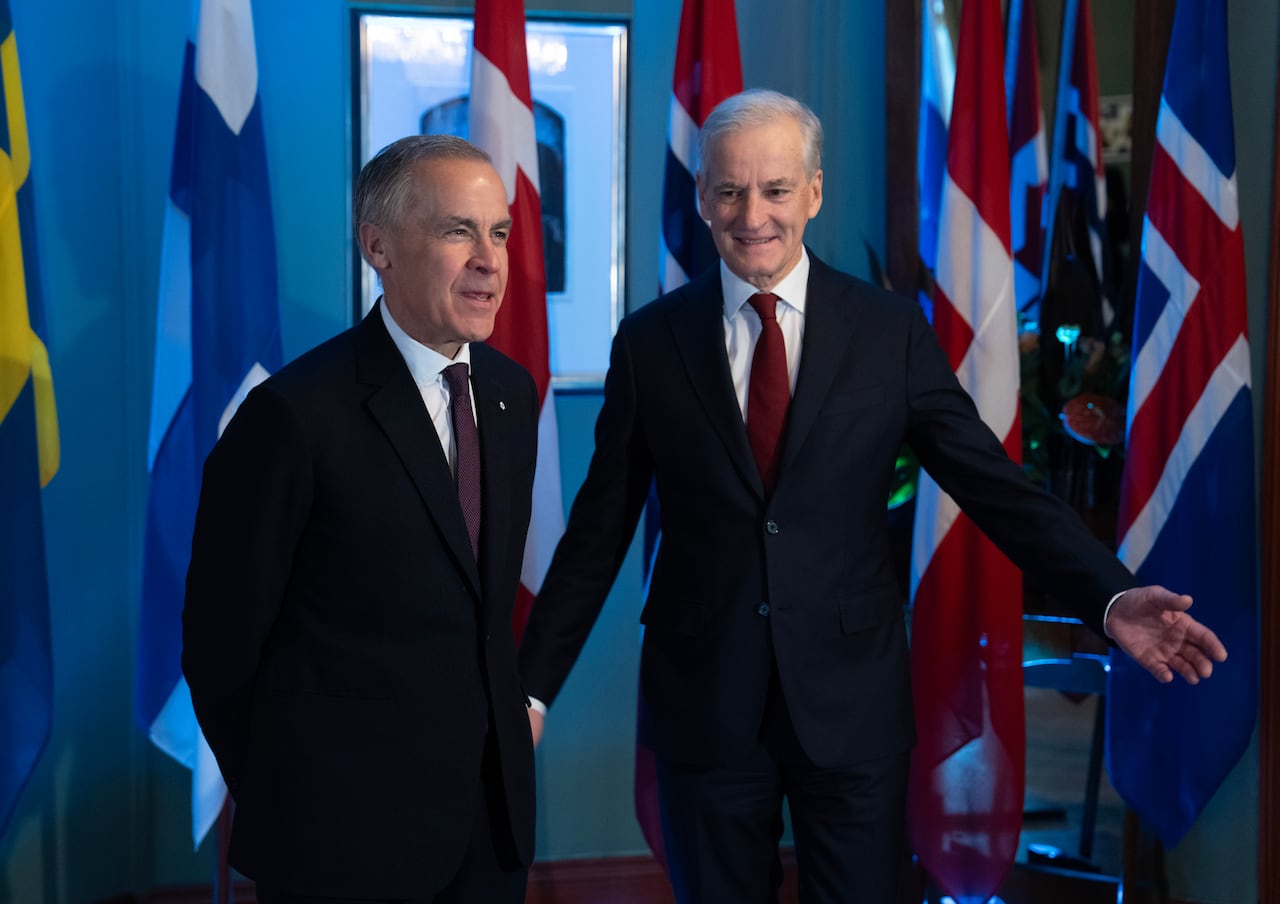
Støre, right, welcomes Carney during the Canada-Nordic Summit at Government House in Oslo, Norway, in March. The two nations signed a strategic partnership after the meeting, significantly broadening cooperation efforts. (Adrian Wyld/The Canadian Press)
Norway seeks Canada as an Arctic ally
After Prime Minister Mark Carney’s visit to Norway in March, both nations established a strategic partnership aimed at enhancing cooperation across various sectors, particularly in the Arctic, where both nations share a border with Russia.
“We consider Canada an integral part of the Northern region. The Atlantic lies between us, but we are both Arctic nations,” Støre stated.
Since Russia is not a partner in the Arctic, Canada and Norway must maintain “very, very close” ties to ensure stability in the North.
In July, Carney opted to procure a dozen submarines from a European shipbuilder rather than a Korean company after a fiercely competitive bidding process. This partnership involves a German firm collaborating with Norway, allowing all three countries to work together on the construction and upkeep of the submarines.
Støre believes that interoperability among submarines is a significant advancement for Arctic security, as well as enhancing industrial collaboration on Arctic research.
“This is why we must focus on our coast guard capabilities and enhance our surveillance abilities. This is a very promising area of collaboration between Norway and Canada.”
Carney engages with Europe
The recent visit by the Norwegian delegation follows Carney’s speech at the European Parliament in Strasbourg, France, meetings with new U.K. Prime Minister Andy Burnham in Liverpool, England, and discussions with French President Emmanuel Macron in Saint-Pierre-et-Miquelon, a French territory located 20 kilometers off Newfoundland’s southern coast.
Regarding the prospect of “associate membership” in the EU?
Støre mentioned that he supports “deeper connections” with Canada, but insists that such ties must be “genuine” and possess “substance.”
As the most integrated non-EU nation in Europe, Støre believes that Canada, the U.K., and Norway should collaborate more closely with the EU on emerging areas requiring cooperation, including space, critical minerals, energy, and artificial intelligence.
“We can all gain from this without letting it devolve into bureaucracy and regulations that complicate matters.”