
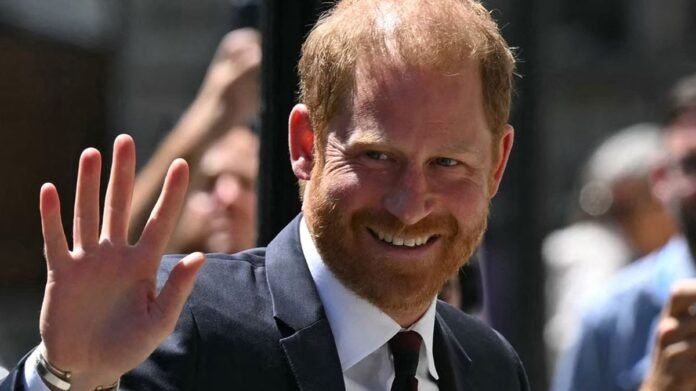

Prince Harry has been unsuccessful in his legal battle against Associated Newspapers Limited. The High Court judge dismissed claims made by Prince Harry, Sir Elton John, and others regarding alleged unlawful information gathering by the publisher of the Daily Mail.
In the ruling, Mr Justice Nicklin acknowledged Prince Harry’s testimony but noted that litigants often tend to advocate their positions strongly. He emphasized that the responsibility for presenting the case lies with the advocate and not the witness.
Regarding the specific articles under dispute, Mr Justice Nicklin found that there was insufficient evidence to support the claims of unlawful information gathering, including voicemail interception. The judge highlighted the lack of concrete proof linking the information to any illegal activities.
Household names such as Baroness Doreen Lawrence, Sir Elton John, and David Furnish had also alleged various illicit practices by private investigators, freelance journalists, and Associated Newspapers Limited employees.
Following the judgment, ANL’s editor in chief, Mr Paul Dacre, hailed the ruling as a significant victory for the Daily Mail, emphasizing the vindication of their journalistic practices. ANL expressed satisfaction with the court’s decision and emphasized the importance of a free press.
In response to the ruling, Prince Harry expressed disappointment, stating that the judgment contradicted previous decisions in similar hacking claims against other newspapers. He criticized the court’s dismissal of evidence and defended his decision to pursue legal action against the publisher.
Throughout the trial, ANL consistently refuted the allegations and defended its journalistic integrity. The company maintained that it had a solid defense against the claims and criticized the legal proceedings for their cost and time-consuming nature.
The verdict comes as Prince Harry engages in public appearances in the UK, leading up to a major event in Birmingham. Despite the outcome, Prince Harry and other claimants expressed dissatisfaction with the judgment, citing concerns about the court’s handling of the case and the perceived bias in favor of the newspaper.
The legal battle has sparked debates on press freedom and privacy rights, with both sides standing firm in their positions. The controversy surrounding the case continues to raise questions about media ethics and the boundaries of journalistic practices.