
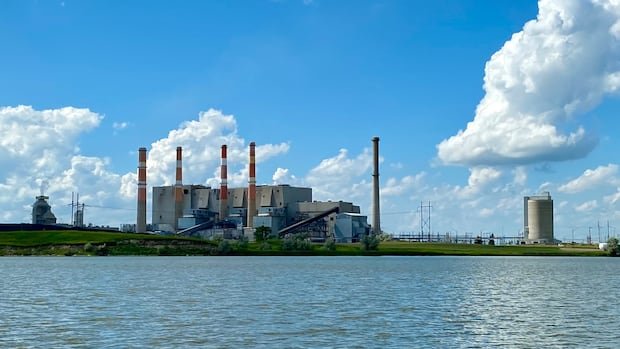

A recent study reveals that the Saskatchewan government’s choice to renovate its coal-fired power facilities could potentially reach $46.4 billion in expenses over the next two decades. This amount surpasses the previously leaked internal SaskPower documents that estimated costs at $26 billion over 25 years. Brett Dolter, an associate professor at the University of Regina specializing in economics, conducted an analysis to determine the financial implications of Saskatchewan’s strategy to transition from coal-fired power plants to nuclear power and Small Modular Reactors (SMRs).
Dolter’s research indicates that maintaining the coal plants and integrating SMRs would be more costly and environmentally damaging compared to decommissioning the coal facilities and establishing a combination of natural gas plants and renewable energy systems, as originally planned by the province before the policy shift in early 2025. He emphasized the potential savings for individuals, estimated at over $800 annually, by adopting a more cost-effective and environmentally friendly approach.
The analysis drew from leaked SaskPower documents, data provided to the province’s rate review panel, and certain assumptions due to the lack of disclosure of the government’s internal analysis. Dolter highlighted that when factoring in carbon pricing, the cost of persisting with coal-fired power plants would amount to $30.2 billion over the next 20 years. Additionally, he projected the total cost to rise to $46.4 billion when carbon pricing is integrated, aligning with the memorandum of understanding between Ottawa and Alberta earlier this year.
While Dolter emphasized the financial implications of Saskatchewan’s current energy strategy, he refrained from speculating on the government’s rationale behind this decision. The government’s response reiterated its commitment to providing reliable and affordable electricity to support the province’s growth, emphasizing a comprehensive approach to meet energy needs through the utilization of local resources and future nuclear energy deployment.
Mayor Tony Sernick of Estevan expressed concerns over the potential population decline if coal-fired plants were phased out, citing the city’s economic reliance on natural resources. However, with the government’s decision to refurbish coal plants and explore nuclear options, there is renewed optimism in the community for future development and stability.
The study also highlighted the financial and legal risks associated with deviating from Canada’s coal phase-out regulations. If SaskPower proceeds with the government’s directive to continue operating coal plants beyond 2029, potential legal challenges on clean electricity regulations, coal-fired regulations, and carbon pricing could pose significant legal and financial liabilities for the province. Dolter warned that in a worst-case scenario, the province could incur substantial costs refurbishing coal plants only to face court-mandated shutdowns, resulting in significant financial losses.
Overall, the analysis underscores the financial implications and environmental considerations associated with Saskatchewan’s energy transition strategy, emphasizing the importance of cost-effectiveness and sustainability in decision-making processes.