
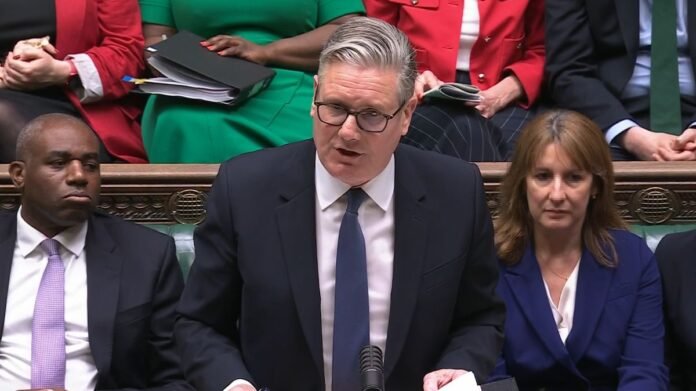

Defiant against calls for his resignation amid the Peter Mandelson controversy, Keir Starmer aggressively defended his position, redirecting criticism towards Tory leader Kemi Badenoch and Green MP Dr Ellie Chowns. Starmer emphasized his commitment to serving the nation.
Facing mounting pressure, the Prime Minister dismissed Foreign Office chief Sir Olly Robbins following revelations on Mandelson’s vetting. During a heated confrontation at PMQs, Badenoch called for the PM to take accountability and step down.
In a swift rebuttal, Starmer refuted Badenoch’s claims, highlighting her inaccuracies regarding UK Security Vetting’s stance on Mandelson’s clearance before his appointment to Washington.
Dismissing Badenoch’s assertions, Starmer reaffirmed his dedication to fulfilling his responsibilities to the country, despite ongoing scrutiny. The controversy stemmed from discrepancies in communication regarding Mandelson’s vetting process, which Starmer had previously believed followed due process.
Further discord arose when Badenoch insinuated that the PM had misled the House, prompting demands for his resignation. Testifying before the Foreign Affairs Committee, Sir Olly criticized No10’s handling of Mandelson’s vetting, while Chowns accused the PM of jeopardizing national security for political gain.
In response, Starmer clarified the circumstances surrounding the vetting process, admitting a critical oversight in not being informed of UKSV’s recommendation, leading to the ill-fated appointment.
The situation underscores a rift in trust and integrity within the government, with calls for accountability and resignation echoing through political circles. Starmer’s acknowledgment of the error in judgment and pledge to act differently in hindsight aimed to address the mounting criticisms.