
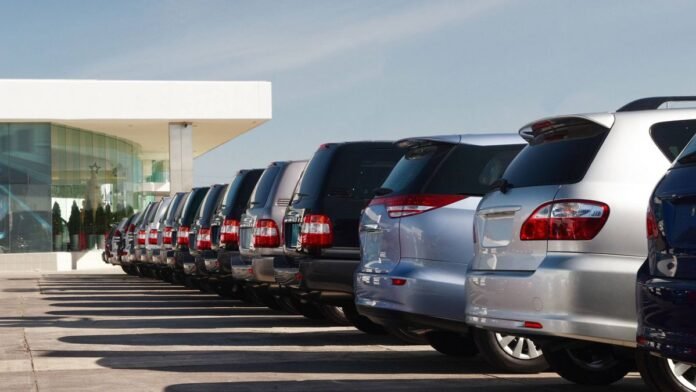

A shift towards larger vehicles is projected to result in major cities losing up to one in seven on-street parking spots, as reported by a study conducted by the Transport & Environment (T&E) think tank. The study also raised concerns that the increasing preference for bigger cars like SUVs, often criticized as “carspreading,” could lead to a rise in road fatalities.
According to the research, the streets are increasingly being taken over by “oversized” vehicles that urban infrastructures were not originally designed to accommodate. The study noted that the length of new cars has been growing by an average of 1.2cm per year since the start of the millennium, with overall height, bonnet height, and width increasing by approximately 0.5cm annually.
If this trend persists, the analysis predicts a reduction in on-street parking availability in cities by 8.5% to 14% by 2040. Specifically, London may face the loss of around 100,000 parking spaces, according to the study’s findings. T&E also highlighted that the surge in larger SUVs could contribute to approximately 400 additional road fatalities annually by 2040 across the UK and European Union compared to a scenario where car sizes reverted to 2015 levels.
The think tank emphasized that car manufacturers have shifted focus away from smaller models despite declining family sizes and lower car occupancy rates. Anna Krajinska, T&E UK director, criticized car makers for prioritizing large expensive vehicles over smaller models, resulting in the dominance of oversized SUVs on city streets. She described the situation as a “lose-lose,” with councils compelled to adapt streets to accommodate larger vehicles at the expense of parking capacity, public space, and safety.
Krajinska stressed that without clear regulations to restrict car sizes and promote appropriate sizing, the issue of “carspreading” will persist unchecked, imposing ongoing costs on cities.