

In their archive located in Lafayette, Louisiana, Barbara Dejean and Stephanie Simon first learned about the alteration in Canada’s citizenship regulations in December through an online news article.
Following that, the phone calls began to flood in.
The calls were from Americans eager to trace their Canadian heritage in order to apply for Canadian citizenship certificates under the new provisions.
“The influx started a bit earlier in January, but now we have over 450 requests pending processing,” stated Simon, associate archivist at the Diocese of Lafayette, which maintains records of numerous Acadian families.
“On the same day that we send out 40 requests, another 40 arrive, making it difficult to make any progress. We are just trying to keep up with the demand.”
Dejean estimates that their two-person archive has received approximately 1,350 requests for records since Bill C-3 was enacted on December 15, 2025. The current processing time for these requests is between 12 to 16 weeks.
Previously, it took just two to three days.
“Requests are coming in from across the United States,” noted Dejean. “Many of the individuals are no longer here; their families have dispersed and moved on.”
Lafayette’s archive is not the only one facing this situation.
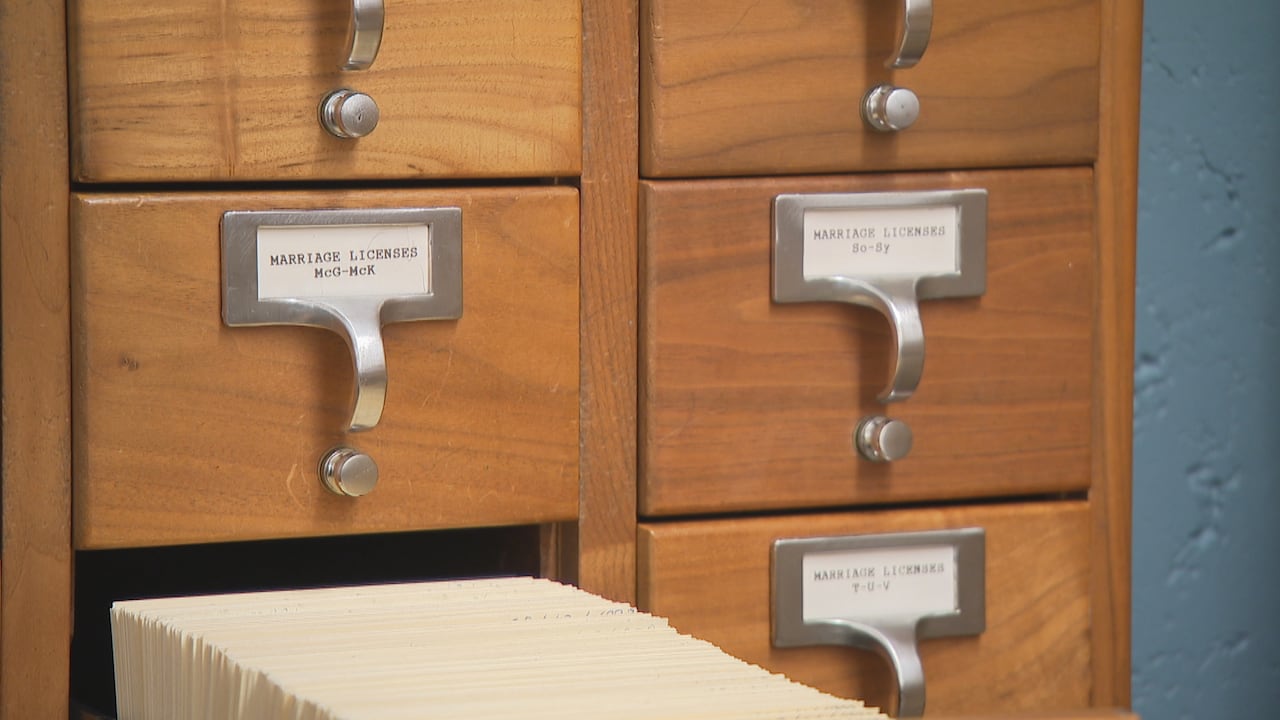
Bill C-3 permits citizenship for individuals who can demonstrate Canadian ancestry, even if it dates back many generations. (Ken Linton/CBC)
Increasing demand for citizenship leads to U.S. archives’ challenges
Although the surge in requests for genealogical records has not yet captured the attention of national archivist associations in the U.S., many American archives—both large and small—are facing unexpected repercussions from Bill C-3.
Bill C-3 facilitates Canadian citizenship for individuals who can prove they are descendants of a Canadian ancestor, even if that ancestor emigrated generations ago. This legislation was enacted following a court ruling that deemed the limitation of citizenship to the first generation born outside Canada excessively restrictive.
The bill has gained significant popularity—especially among Americans.
As per the latest data from Immigration, Refugees and Citizenship Canada, 6,635 individuals were granted Canadian citizenship certificates due to Bill C-3 from December 15, 2025, through June 30, 2026. More than half of these newly acknowledged Canadian citizens under Bill C-3, totaling 3,510, were born in the United States.
Additionally, 19,160 individuals have received certificates due to having a Canadian parent, with 9,150 of them hailing from the U.S. Before the bill’s passage, individuals born outside Canada were required to have a Canadian parent to qualify for citizenship.
These certificates enable the 25,795 newly recognized Canadian citizens to apply for Canadian passports and establish residence and employment in Canada.
Nonetheless, the volume of applications for Canadian citizenship certificates has surged dramatically, currently reaching 136,000 applications, with an anticipated processing duration of 33 months.
Last October, Immigration Minister Lena Metlege Diab informed the House of Commons immigration committee that she did not foresee a surge of applications for citizenship certificates once Bill C-3 became effective, estimating “volumes in the tens of thousands over time.”
Estimates regarding the potential number of individuals who could qualify for Canadian citizenship due to Bill C-3 vary significantly.
Some experts point to a historical period of over a century in the 1800s and 1900s, during which hundreds of thousands of Canadians—especially from Quebec—migrated to the U.S. in search of employment.
Small archives face increasing workload
One region that experienced an early surge of French-Canadian immigrants is southern Illinois, where Mike Heithaus works as a part-time archivist for the Diocese of Belleville.
He mentioned that the number of requests began to rise around May or June but slightly decreased in September.
“From approximately June 1st to early September, I received 32 requests, which may not seem like a large number,” Heithaus remarked. “However, when it’s just me working 10 to 15 hours a week, that consumes nearly all my time.”
Immigration Minister Lena Metlege Diab announced that her department paused ‘lost Canadians’ applications—people living abroad who can trace their lineage to Canadian ancestors—for a departmental ‘quality check’ on the program implemented after the passage of Bill C-3. ‘Such occurrences are normal during quality assurance checks, and it was deemed that improvements could be made,’ Diab explained to reporters in Winnipeg on Monday.
Heithaus mentioned that the diocese considered whether to continue responding to these requests. Rather than turning them away, they opted to increase Heithaus’s hours from 10 to 15 per week and more than triple the fee for requests from $10 to $33 US.
Larger archives feeling the pressure as well
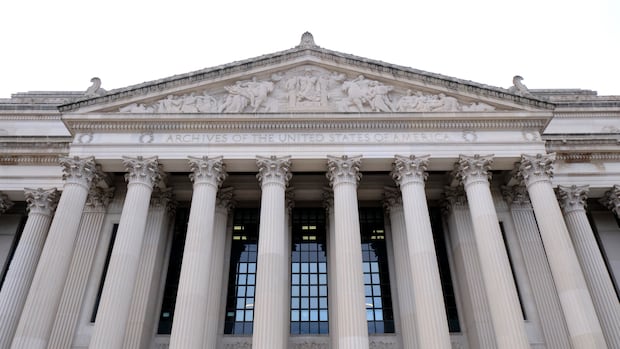
The U.S. National Archives and Records Administration’s (NARA) collection encompasses various types of documents that can assist in establishing ancestry, such as naturalization, census, passenger, and Canadian border-crossing records.
While NARA’s public affairs department declined to comment, sources who requested anonymity due to job security concerns indicated that archivists are encountering a rise this year in requests from individuals pursuing Canadian dual citizenship under Bill C-3. There is also an uptick in requests from Americans seeking dual citizenship in other nations, such as Italy or Germany.
Archivists have a range of responsibilities, and the surge in requests from aspiring dual citizens has resulted in a backlog and prolonged processing times.
“It has become unmanageable,” one source remarked. “The situation is becoming unstable. People are actively seeking these records, which has taken over a significant portion of our workload.”
-
Canadian citizenship certificate applications now facing nearly 3-year delays
-
Demand for Canadian citizenship certificates soaring, fuelled by Americans
Anderson Smith, an archivist at the Acadian Archives within the University of Maine at Fort Kent, reported a significant increase in requests for Canadian citizenship-related documents, rising from one request each in 2024 and 2025 to 72 in 2026. However, a change in IRCC regulations in June, which mandated original or certified copies of documents, led to a reduction in requests.
“Initially, we were experiencing a higher volume of inquiries because we could provide the necessary records, but the changes in regulations in June led to a decline in the number of individuals approaching us for these records.”
There’s a global rush to recruit America’s top talent as Trump administration policies push many professionals to explore career and study plans abroad. CBC’s Eli Glasner takes a closer look at efforts to bring some of those doctors and scientists to Canada.
Smith indicated that staff at the archives are now assisting requesters in locating original sources or finding the appropriate institutions that can provide certified copies of the required records.
American archives are not the only ones feeling the effects of Bill C-3.
Normand Deragon, president of the American French Genealogical Society in Woonsocket, Rhode Island, which aids individuals in tracing their French-Canadian ancestry, reported processing around 200 requests since the implementation of Bill C-3, with a backlog of about 150 additional requests.
“We operate as an all-volunteer organization, and no one is compensated,” Deragon explained. “Our library is open just two days a week, highlighting how quickly we can become overwhelmed with requests… But we are doing our best to handle them as efficiently as possible.”