
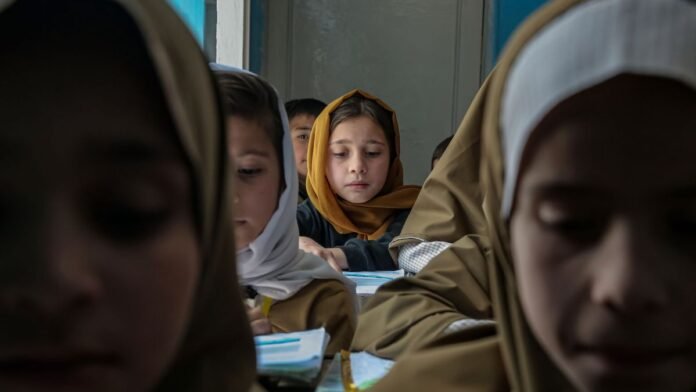

The Taliban has recently formalized the acceptance of child marriages, outlining disturbing guidelines in their new family regulations. This move comes in the wake of Afghanistan legalizing domestic violence and further restricting women’s rights. The new 31-page document, titled ‘Principles of Separation Between Spouses,’ delves into the union of minors, specifically addressing aspects related to ‘virgin girls,’ breastfeeding, forced separations, apostasy, adultery, and missing spouses.
According to reports from Afghan outlet Amu TV, the guidelines allow female children to marry adult men, with the option to seek annulment upon reaching puberty with a court order. The document mandates that a child’s marriage must be arranged by relatives other than their father or grandfather, with the condition that the spouse is deemed socially compatible and an appropriate dowry is provided.
The Taliban also caution that abusive, mentally unfit, or morally corrupt guardians could render these marriages invalid. Shockingly, the document suggests that a ‘virgin girl’s’ silence could be interpreted as consent to marriage. Notably, there is no longer an official minimum marriage age in Afghanistan, with the Taliban reversing the previous age limit of 16 set after the 2001 Western invasion.
In a rare move, the Taliban condemned a 45-year-old man who married a six-year-old girl, capturing him and imposing a grim order to wait until the child turns nine before taking her home. Statistics from Girls Not Brides reveal that a significant percentage of Afghan girls marry before the age of 18, with a concerning rise in child and forced marriages documented by the United Nations.
Under Taliban rule, the ‘marriageable age’ for girls is determined by Islamic law, disregarding personal choice and relying on Hanafi jurisprudence that defines puberty as the threshold for readiness. This disturbing trend persists in a country where women are marginalized, families are pressured to sell their daughters, and oppressive practices like ‘walwar’ involve exchanging girls for money based on their attributes.
Women in Afghanistan face severe restrictions, prohibited from public speaking and even revealing their faces outside the home. Forced to wear full-body coverings and barred from social spaces, these women are isolated from support networks and essential services. This oppressive environment underscores the dire situation for women in Afghanistan, where traditional practices and Taliban policies perpetuate gender inequality and human rights violations.