
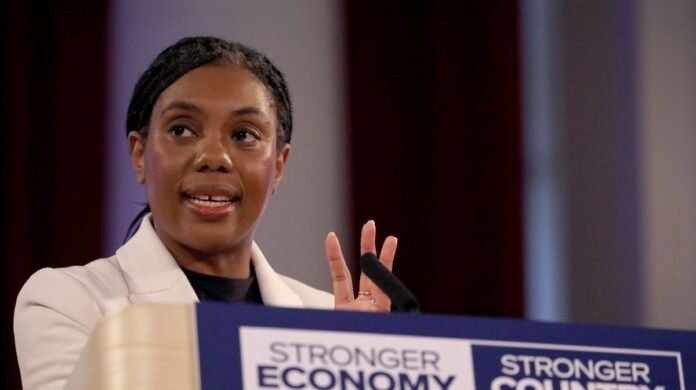

Kemi Badenoch is facing allegations of hypocrisy following criticisms that the Conservative Party has weakened the defense capabilities of Britain.
The Conservative leader had urged Britain to demonstrate a willingness to engage in defense commitments, proposing the largest peacetime rearmament program in the country’s history, particularly emphasizing the need for increased troop numbers.
During a speech at the London Defence Conference, Ms. Badenoch promised a significant rise in British troop levels if the Tories regain power, including plans to recruit 6,000 regular soldiers and 14,000 reservists.
However, a Labour Defense Minister cautioned that under the Tories’ support for US/Israeli military actions in Iran, Britain could find itself in a conflict without a clear strategy. The Minister criticized Kemi Badenoch for advocating a swift military response without proper consideration of the consequences, emphasizing that such actions could jeopardize national security and lead to increased child poverty.
In contrast, Keir Starmer, the Labour leader, was praised for his approach of avoiding offensive actions while supporting regional allies. The Labour Government has committed to a substantial increase in defense spending, aiming to boost national security and support British businesses and workers.
Ms. Badenoch had previously criticized the Prime Minister for the perceived lack of preparedness during a Middle East conflict outbreak, highlighting the need for swift mobilization like that of other European allies. The Tories proposed funding boosts for the armed forces through policy changes, while Keir Starmer’s Government plans to increase core defense spending to 2.5% of GDP by 2027 and 3% in the future.
The Tories have been accused of reducing real-terms defense spending by 22% between 2010 and 2016/17, with the current government attributing the underinvestment to previous Tory administrations.
Overall, the debate over defense spending and strategies continues to shape the political landscape as parties present contrasting approaches to safeguarding national security and military readiness.