
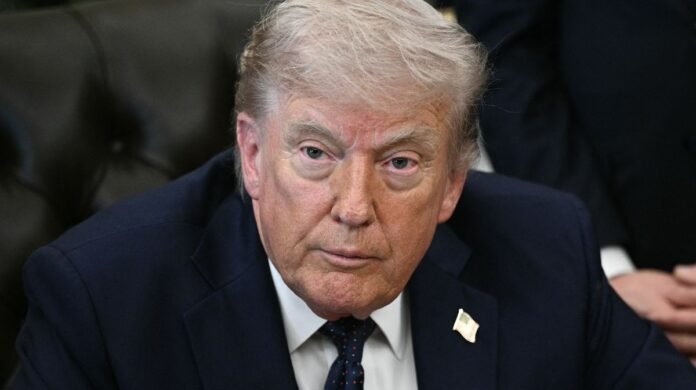

Donald Trump took to social media to assert that Tehran has requested the US to reopen the Strait of Hormuz urgently, citing Iran’s purported state of collapse. The US president made these claims on Truth Social, stating that Iran sought the reopening of the crucial shipping route as they grapple with internal leadership issues.
In response, an Iranian military spokesperson, in a televised broadcast following Trump’s post, emphasized that Iran does not view the conflict as resolved and has updated its database of targets and military equipment. The UK’s Foreign Office summoned Iran’s ambassador over what they deemed as provocative social media posts by the Iranian embassy.
Separately, the United Arab Emirates announced its decision to withdraw from the OPEC group of oil-producing nations next month. The UAE, an OPEC member since 1967, cited the move as necessary to address increasing global energy demands following recent capacity enhancements in oil production.
Furthermore, an Iranian military representative reiterated that Iran remains in a wartime state despite Trump’s social media assertions. The spokesperson disclosed that the Revolutionary Guard manages the western portion of the Strait of Hormuz, while the regular army controls the eastern section.
Amid escalating tensions, the Israeli foreign minister highlighted the need for a military-controlled buffer zone extending into Lebanon to safeguard northern Israeli residents. The minister raised concerns over Hezbollah’s alleged transformation of southern Lebanon into a terrorist infrastructure network, calling for Lebanese government action to counter Iranian influence.
Additionally, the President of the United Nations General Assembly emphasized the urgent need for a ceasefire in the Iran conflict during a visit to New Delhi. The ongoing war has disrupted global supplies, leading to increased oil and fertilizer prices due to incidents such as blockades in the Strait of Hormuz.
BP faced criticism after reporting a significant profit surge driven by heightened crude oil costs amid the Iran conflict. Activists condemned the company for profiting at the expense of consumers facing rising fuel prices and energy bills.
In a related development, Russia’s UN ambassador defended Iran’s control over the Strait of Hormuz, accusing Western nations of double standards. The ambassador argued that a coastal state under attack has the right to restrict navigation in its territorial waters for security reasons.
Moreover, UK Prime Minister Keir Starmer reassured the public about the economic impact of the Iran conflict, urging calm while emphasizing the government’s efforts to mitigate disruptions. He underscored the importance of reopening the Strait of Hormuz to alleviate adverse effects on the UK economy.