
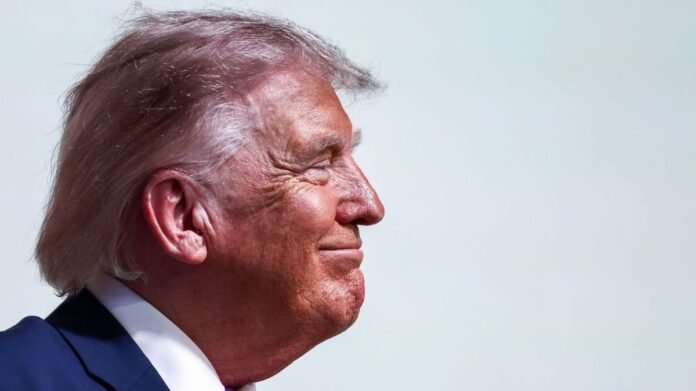

Former President Donald Trump is reportedly establishing a billion-dollar fund aimed at distributing money to his supporters and individuals involved in the attempted insurrection to maintain his presidency. Taxpayers in the United States are expected to finance this fund, regardless of their approval.
Earlier this year, Trump took legal action against the IRS for the unauthorized disclosure of his tax records during his initial term in office. Despite the whistleblower responsible for the leak already serving a five-year prison sentence, Trump pursued a lawsuit against the IRS seeking $10 billion in damages. Notably, this amount far exceeds the IRS’s operational budget and raises eyebrows due to Trump’s dual role as President and the overseer of the IRS and the Justice Department.
Facing scrutiny from a judge who highlighted the conflict of interest in the case, Trump and the government department ultimately decided to settle out of court for $1.7 billion. Initially, Trump proposed donating any awarded funds to charity, but the plan has since shifted to establishing a $1.7 billion compensation fund. This fund aims to provide restitution to individuals Trump believes were mistreated by the Justice Department during and after his presidency, including those involved in the January 6th insurrection.
The fund’s operation involves a board of six members, with five appointed by the Attorney General, who, notably, has ties to Trump. The lack of transparency in the board’s decision-making process and the absence of accountability mechanisms have drawn criticism, with the House Judiciary Committee condemning the fund as “pure fraud and highway robbery.”
Critics, including Donald Sherman from Citizens for Responsibility and Ethics in Washington and news anchor Ari Melber, have denounced the fund as a corrupt scheme, likening it to historical scandals like Watergate. The fund’s staggering amount, $1.776 billion, hints at symbolic messaging, with “1776” referencing the year of the American revolution and potentially signaling support for the January 6th rioters.
The implications of this fund extend beyond allegations of corruption, raising concerns about the erosion of democratic norms and the potential for Trump to subvert the rule of law. The fund’s creation underscores a troubling trend towards rewarding criminal behavior and fostering a culture of impunity, sparking fears of more significant threats to the nation’s democratic institutions.