
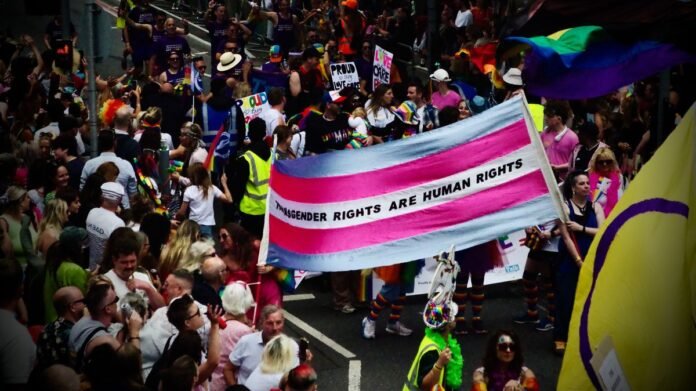

Gender-critical activists have expressed approval of the latest Government guidelines regarding single-sex spaces as a significant step, while advocates for trans rights have criticized the regulations as chaotic and reminiscent of policies in the United States under Trump’s administration.
The updated guidelines were released more than a year after a groundbreaking Supreme Court ruling in April 2025, which clarified that the terms “woman” and “sex” in the Equality Act 2010 pertain to biological females and biological sex.
Various groups on both sides of the argument have reacted to the new guidelines issued by the Equality and Human Rights Commission (EHRC) and made public on Thursday.
The CEO of the sex-based rights charity Sex Matters emphasized that the guidelines leave no room for excuses for organizations that have yet to adjust their policies according to the Supreme Court ruling.
However, the Good Law Project (GLP) contended that the approach was discriminatory and deviated from the international human rights standard.
There is disagreement between the two sides on whether the guidelines will result in more institutions creating gender-neutral facilities.
Alexandra Parmar-Yee, director of the Trans+ Solidarity Alliance, expressed concerns about the confusing nature of the law and the potential exclusion of trans individuals from public spaces.
The guidance has been likened to a pivotal moment for the Labour government, shaping their stance on LGBTQ+ rights. Critics suggest that the policy mirrors those seen in the United States during Trump’s presidency, raising worries about the treatment of trans individuals and potential violations of human rights standards.
Maya Forstater from Sex Matters pointed out that service providers must be cautious when transitioning to gender-neutral spaces to avoid potential discrimination against women based on sex.
The guidelines advocate for the establishment of gender-neutral spaces in situations where trans individuals lack appropriate facilities.
For Women Scotland, who achieved success in the Supreme Court case defining a woman, expressed satisfaction that the guidelines had finally been published, hoping this would end delays in implementing the Supreme Court ruling and hold organizations accountable to women.
Jess O’Thomson, the trans rights lead for GLP, acknowledged improvements from previous drafts but believed that more changes were necessary to address the discriminatory treatment of trans individuals as a separate gender.
Ms. O’Thomson emphasized the need to continue advocating against this discriminatory approach that disregards the harm caused to trans individuals and human rights principles.