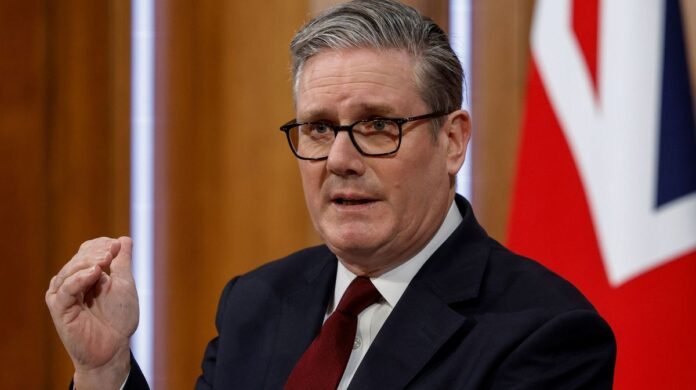

Keir Starmer emphasized the resilience of the UK economy in the face of repercussions from the Middle East conflict during a press briefing at Downing Street.
The Prime Minister announced a swift response with a £53 million emergency aid package for heating oil consumers affected by the price surge triggered by the US-Israel conflict with Iran. He highlighted that resolving the Middle East war promptly is crucial to mitigating the cost of living and committed to efforts aimed at de-escalating the situation.
Additionally, the Prime Minister reaffirmed the UK’s stance of not being involved in the broader US-Israel-Iran conflict and defended the decision to deny the US access to British bases initially.
The General Secretary of the Trades Union Congress (TUC) commended the Prime Minister’s prompt assistance to those hit hardest by soaring energy costs but cautioned that the ongoing war could continue to jeopardize living standards. He emphasized the potential need for further support to combat ‘Trumpflation’ and echoed the call for a swift de-escalation in the Middle East while urging the government to take decisive actions to shield households and businesses from global shocks.
A key highlight from the Prime Minister’s address was the immediate aid provided to vulnerable individuals facing the heating oil price surge due to the Iran conflict, with a pledge of £53 million to support the most affected customers, particularly low-income families in rural areas. Concerns were raised about reports of heating oil suppliers canceling orders and subsequently raising prices, prompting a firm stance against profiteering from the public’s struggles.
Moreover, the Prime Minister outlined measures to protect energy bill costs for other consumers through price capping until early summer, ensuring an average household saving of £117. He emphasized the necessity of energy companies passing on savings to customers and warned of potential legal action against any non-compliance.
Regarding fuel duty adjustments, the Prime Minister mentioned that decisions are under review, with the current 5p cut scheduled to phase out by the end of August. He assured ongoing monitoring of the situation and hinted at potential future measures beyond the existing timelines.
In addressing rising fuel prices, Mr. Starmer emphasized the government’s commitment to monitoring the situation and protecting the public from cost-of-living pressures, highlighting existing measures like energy bill capping and fuel duty adjustments. He reiterated the importance of de-escalation in the Middle East to alleviate economic strains domestically.
The Prime Minister provided updates on the repatriation efforts, with over 92,000 British nationals returning from the Middle East amid the conflict. Collaboration with European nations to devise a collective plan for reopening the Strait of Hormuz was discussed as a complex but essential task.
Conversations with US President Donald Trump regarding Nato’s future and potential naval contributions were mentioned, emphasizing ongoing discussions with allies to restore navigation freedoms swiftly and mitigate economic repercussions. The Prime Minister reiterated the UK’s commitment to avoiding further entanglement in the Middle East conflict and striving for a swift resolution to safeguard domestic interests.
Mr. Starmer warned against allowing the Middle East conflict to benefit Russian President Vladimir Putin and expressed the importance of supporting Ukraine amid the regional turmoil.
In conclusion, the Prime Minister emphasized the necessity of continued support for Ukraine and preventing the conflict in the Gulf from becoming advantageous to Putin, especially following the US’s recent easing of sanctions on Russian oil purchases as a short-term response to escalating costs due to the Middle East conflict.