
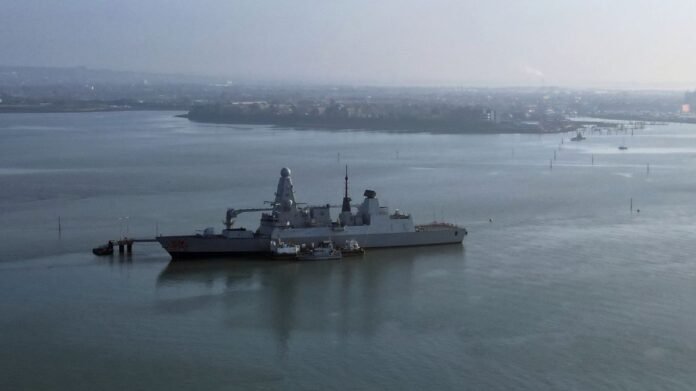

Keir Starmer has decided to forego the replacement of the Royal Navy’s aging destroyers in favor of introducing “hybrid” warships as part of a much-anticipated initiative to modernize the armed forces.
A minimum of six new Common Combat Vessels will be introduced to substitute the current fleet of six Type 45 destroyers, with the implementation set to commence from the early 2030s.
These new warships will possess the capability to coordinate unmanned systems in the air, on the surface, and beneath the sea, particularly significant at a time when there is a surge in Russian submarine activity near crucial undersea cables in the Atlantic.
The proposal to construct a new class of guided-missile warship, a Type 83 destroyer, as a replacement for the existing vessels, has been abandoned from the troubled Defence Investment Plan (Dip), which is expected to be released this week.
A dispute over funding among ministers led to the resignations of Defence Secretary John Healey and Armed Forces Minister Al Carns earlier this month.
The new Defence Secretary Dan Jarvis has reportedly secured an additional £1 billion on top of the previous offer, bringing the total closer to £15 billion over the next four years. However, this amount falls significantly short of the £28 billion that defense officials have indicated is necessary to ensure Britain’s readiness for warfare.
The Prime Minister is anticipated to publish the Dip as early as Tuesday before a crucial NATO summit in early July, marking one of his final significant actions before handing over leadership to the anticipated successor Andy Burnham, who has reportedly approved the plans.
According to Defence Secretary Dan Jarvis, “Our Royal Navy is a formidable force, working to safeguard our nation and allies in the Atlantic and beyond. These Common Combat Vessels will equip our committed sailors with hybrid ships tailored to counter the escalating threats we confront.”
Developed in collaboration with outstanding British innovators, the new ships will be constructed in Britain, creating jobs nationwide and furnishing the Royal Navy with a capability tailored for contemporary warfare.
These plans align with the strategy of First Sea Admiral General Sir Gwyn Jenkins to transition towards a new “hybrid Navy” comprising traditional crewed ships, submarines, autonomous vehicles, and AI.
Officials have indicated that Mr. Jarvis has redirected the focus of the Dip towards providing more equipment to frontline troops, including £500 million designated to outfit the UK Commando Force with high-speed boats and lethal strike drones.
The elite force, capable of rapid deployment worldwide, will receive investments targeted at operations in the High North, where Russian activities are escalating. Some of the funding will be allocated to new high-speed commando insertion craft intended for use in intercepting Russian shadow fleet vessels.
Royal Marine commandos recently participated in intercepting the tanker Smyrtos in the Channel in the UK-led operation to seize a sanctioned ship earlier this month.