
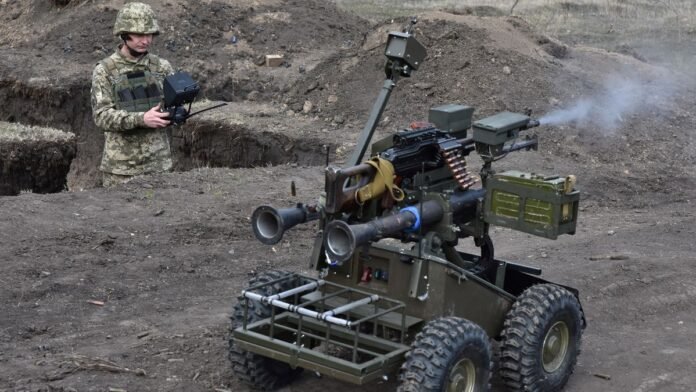

Ukrainian forces achieved a significant victory by utilizing robotic technology to overpower Russian troops in a groundbreaking fully automated assault, according to statements from Kyiv.
The successful operation involved Ukrainian robots and drones storming a Russian position, compelling the enemy to surrender without the need for direct human engagement. This innovative approach, considered a first in military history, reflects Ukraine’s ongoing efforts to enhance battlefield capabilities with advanced robotic systems aimed at reducing casualties. President Volodymyr Zelensky emphasized the importance of this technological advancement, stating, “The future is now at the frontline, and Ukraine is leading the way.”
The UK’s Ministry of Defence announced the delivery of 120,000 drones to Ukraine, marking the largest such deployment to date. Ukrainian officials praised their robotic systems, highlighting various models like Ratel, TerMIT, Ardal, Rys, Zmiy, Protector, and Volia, which have collectively carried out over 22,000 missions in three months, significantly impacting the preservation of human life.
Amid the ongoing conflict, Ukrainian engineers and military researchers are dedicated to developing new robotic systems to counter Russian aggression. In Kharkiv, a strategic location near the front, soldiers are working on Unmanned Ground Vehicles (UGVs) for logistical support, including the delivery of essential supplies to sustain frontline positions.
Despite facing challenges like wear and tear from combat operations, Ukrainian forces strive to salvage and reuse components from damaged robots. The effectiveness of these robotic systems is evident in the significant impact on Russian forces, with over a million troops reportedly incapacitated due to death or injury.
With the escalating conflict, President Putin is reportedly seeking additional support from non-Russian sources, including North Korean and African mercenaries. UK Defence Secretary John Healey warned of distractions created by Putin’s actions, particularly with a focus on the Middle East in recent developments.
At Reach and across our entities we and our partners use information collected through cookies and other identifiers from your device to improve experience on our site, analyse how it is used and to show personalised advertising. You can opt out of the sale or sharing of your data, at any time clicking the “Do Not Sell or Share my Data” button at the bottom of the webpage. Please note that your preferences are browser specific. Use of our website and any of our services represents your acceptance of the use of cookies and consent to the practices described in our Privacy Notice and Terms and Conditions.