

Eight decades later, the Holocaust remains a haunting chapter in human history. From 1941 to 1945, approximately six million Jewish individuals, along with many others, fell victim to the atrocities committed by the Nazis.
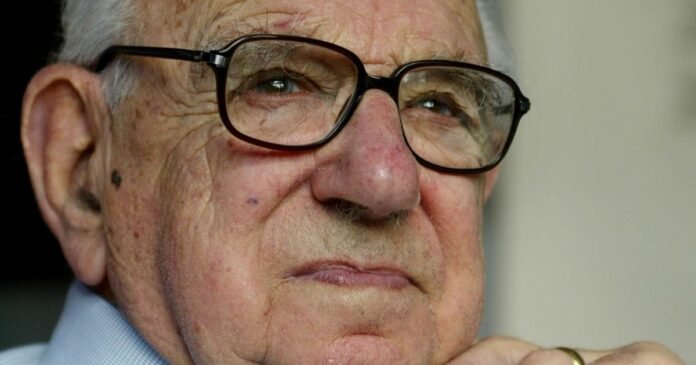
Under Hitler’s ‘final solution,’ Jewish people were rounded up and transported to camps in German-occupied regions, where they faced systematic extermination. Brave individuals like Sir Nicholas Winton played a crucial role in preventing further tragedies.
Hailing from Hampstead, Sir Nicholas orchestrated the rescue of Jewish children from Czechoslovakia through the Kindertransport program as World War Two loomed. Credited with saving 669 young lives from Nazi persecution, his heroic deeds remained unknown for nearly four decades until his story was unveiled.
A poignant moment captured on a 1988 episode of the BBC’s That’s Life! shows Sir Nicholas reuniting with the children he saved, as presenter Dame Esther Rantzen shared his remarkable tale and the documented records of his noble mission.
The heartwarming clip, dubbed by some as “the greatest moment in television history,” resurfaces yearly ahead of Holocaust Memorial Day, commemorated on January 27. Sir Nicholas, once a silent hero, was eventually recognized for his selfless actions, drawing comparisons to Oskar Schindler for his courageous efforts during the Holocaust.
At 29 years old, Sir Nicholas witnessed the plight of Jewish refugees in Prague post-Christmas 1938, sparking his initiative to organize transports to safeguard children and find them caring host families in Britain.
In 2003, he received a knighthood, and in 2014, the Czech Republic honored him with the Order of the White Lion, its highest accolade. His extraordinary story inspired the film “One Life,” featuring Sir Anthony Hopkins as the protagonist in 2023. Sir Nicholas passed away in 2015 at the age of 106, leaving behind a legacy of compassion and heroism.
Described as an inspiration by the Holocaust Memorial Day Trust, Sir Nicholas Winton’s modesty in the face of his extraordinary deeds serves as a poignant reminder of the impact of individual actions in the face of adversity.