
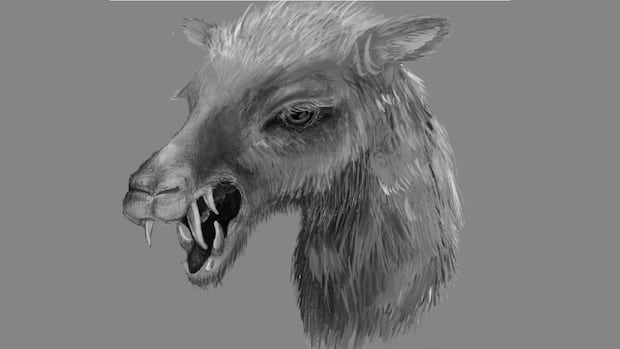

You need not worry about the vampire camel.
For starters, this fanged creature last inhabited the plains of what we now call North America around 12 million years ago.
Furthermore, despite its two sets of teeth reminiscent of Dracula and its fearsome nickname, it was most likely a herbivore that feasted on leaves rather than a bloodthirsty monster.
“Unless you did something to provoke it, it wouldn’t be a threat to you at all,” stated paleontologist Donald Prothero during a chat with As It Happens host Nil Kӧksal. “We simply thought it deserved an intriguing name.”

Donald Prothero, a paleontologist at California State Polytechnic University, Pomona, discusses Vampyrocamelus, also known as the vampire camel, with As It Happens host Nil Kӧksal.
Vampyrocamelus is among five newly recognized species detailed in a comprehensive monograph concerning the evolution of North American camels, which has been published in the New Mexico Museum of Natural History and Science Bulletins.
Researchers indicate that this finding provides fresh insights into the Clarendonian period, a time when enormous predators and herds of grazing mammals dominated the savannah-like landscapes of what is now North America.
What purpose do those teeth serve?
The vampire camel thrived approximately 12 to 13 million years ago in regions that are now Texas, Oklahoma, and Nebraska.
Only male vampire camels possessed the prominent, curved fangs that inspired its name.
Despite having such sharp front teeth, the molars discovered from Vampyrocamelus fossils indicate that it was an herbivore, similar to other camels.
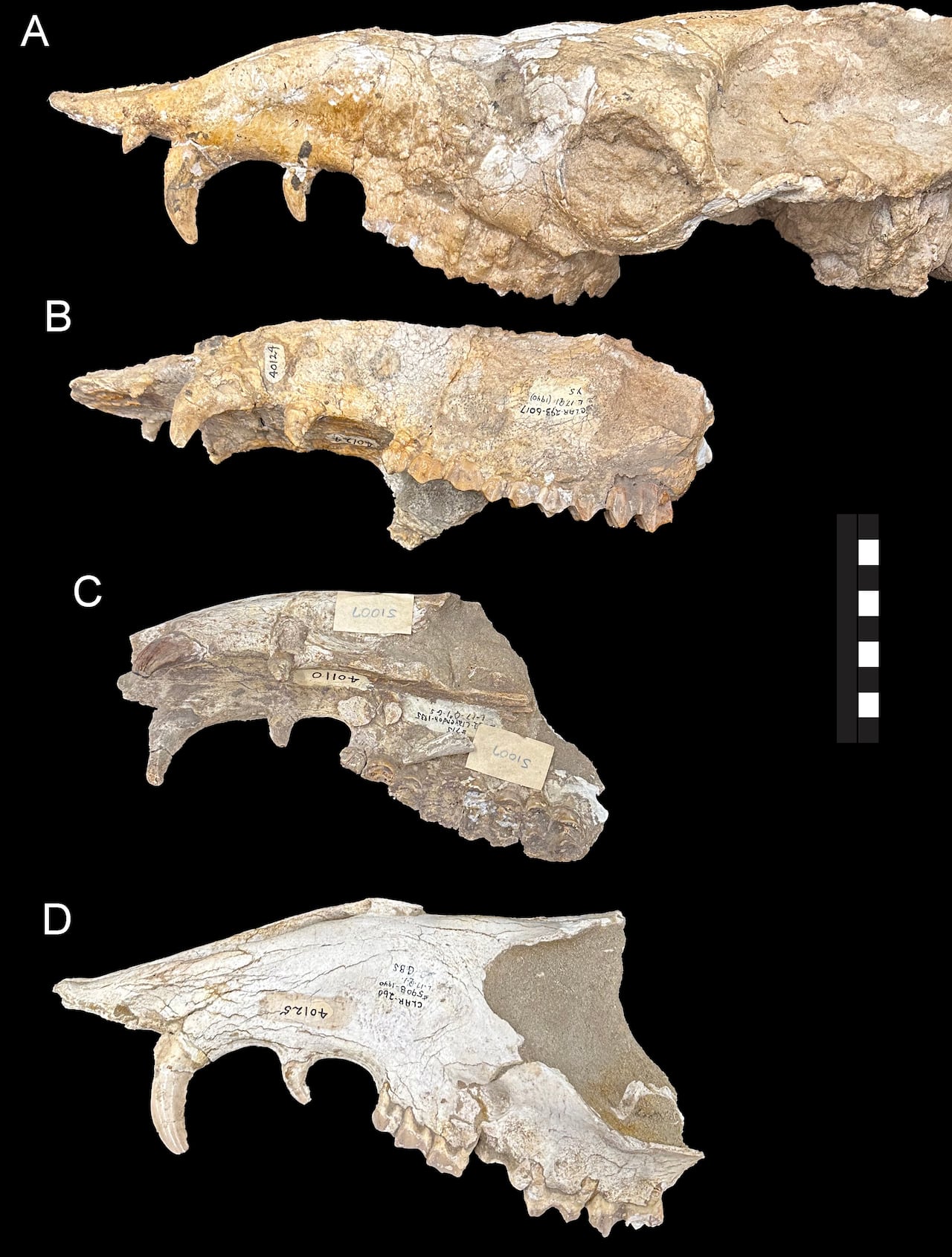
Fossils of Vampyrocamelus show two sets of curved canines. (Donald Prothero)
So, if those teeth weren’t intended for tearing into unsuspecting prey, what was their purpose?
“Male camels utilize their teeth to engage in combat with each other until one establishes dominance, allowing him to become the sire of the next generation,” explained Prothero, who serves as an adjunct professor at California State Polytechnic University, Pomona.
In fact, Prothero notes that it’s typical for male camels to have more prominent canines compared to females. However, in contemporary species, the teeth are more conical and less noticeable.
“Modern male camels employ them in fights among themselves,” Prothero remarked. “I’ve heard that during these battles, one of the common tactics is to bite each other’s testicles.”
Camels in North America?
Currently, camels inhabit the deserts of Africa and Asia, as well as the mountainous regions of South America. However, this has not always been the case.
Prothero states that camels first originated in North America around 46 million years ago. Since 1982, he has been dedicated to documenting every camel species found on the continent.
To achieve this, he and his team, including students, have been investigating fossils from the Frick collection, which comprises approximately 200,000 specimens distributed across seven floors at the American Museum of Natural History (AMNH) in New York.
According to Prothero, there is an entire floor dedicated to camels, featuring around 20,000 specimens.
“It’s mostly filled with drawers upon drawers of skulls, jaws, and limb bones,” Prothero explained. “Some of these specimens have remained in that collection for a century without being studied.”
-
Meet the ‘hell chicken,’ a feisty little dinosaur who feasted on fruit
-
Newly discovered ancient apex predator had knife-sharp teeth and bone-crushing jaws
Originally, it was the private collection of millionaire Childs Frick.
Until Frick’s passing in 1965, this collection was inaccessible to scientists outside of his staff. It wasn’t until a decade later that the collection was relocated to New York and made available for research.
Prothero and his associates meticulously examined this collection and classified 80 species of North American camels across 40 genera, including five that are newly recognized, such as a long-snouted camel named Longirostrotylopus holroydae.
The team also eliminated 130 previously identified species that are now deemed invalid due to fresh evolutionary insights.
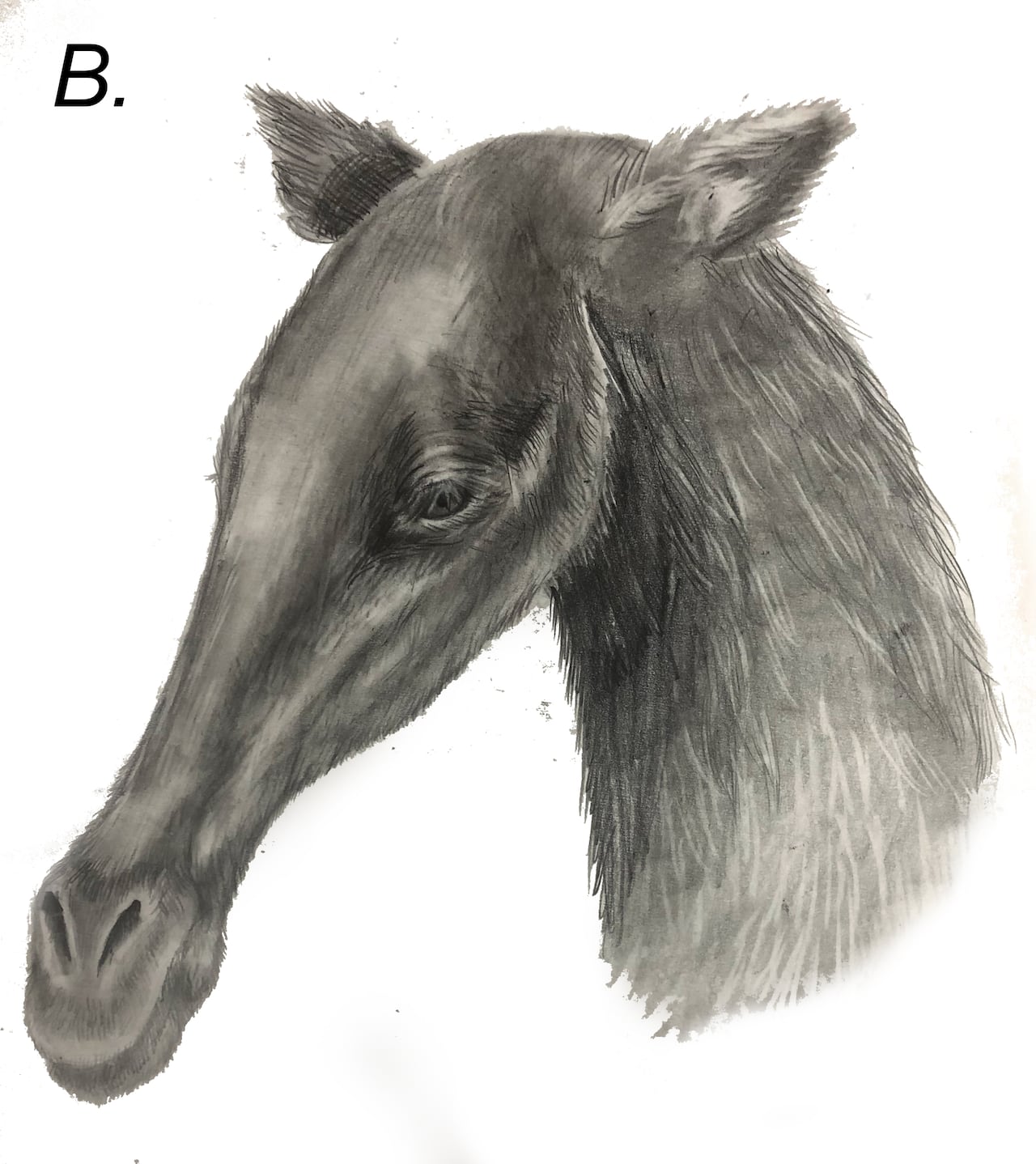
Longirostrotylopus holroydae is a newly identified genus and species of long-snouted camel from the John Day Fossil Beds in Oregon. (Submitted by Donald Prothero)
Danielle Fraser, a paleobiologist at the Canadian Museum of Nature, expressed her support for the new taxonomy, which includes the vampire camel.
“Without knowing the total number of species, we might miss out on understanding the true patterns of evolutionary change,” said Fraser, who was not part of the research, in an email.
“This monograph could enhance fossil databases utilized by various scientists to comprehend how mammalian faunas have transformed over time.”