
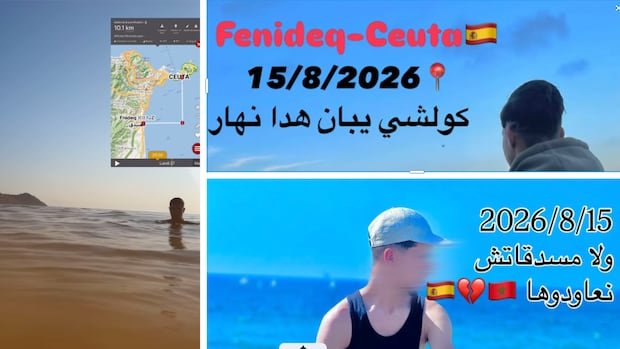

In the days leading up to the recent significant influx of migrants to Europe, a brief video shared on Instagram attracted 1.4 million views. The video depicted a young man partially submerged in water, followed by a view of land in the distance with a map outlining a sea route from Fnideq, Morocco, to Ceuta, a Spanish enclave in Africa. The account holder later indicated in comments that they had reached their destination.
This video was just one of many viral posts across platforms like Instagram and TikTok that seemed to have influenced two waves of irregular migration from Morocco to Ceuta. The most recent attempt on August 15 resulted in numerous arrests.
Various online communities with a focus on migration-related culture, such as music, memes, and imagery, were involved in these accounts. Some of these communities seemed to exploit the aspirations of African and Middle Eastern youth seeking better opportunities abroad.
While there is a debate among authorities and organizations regarding whether a single entity orchestrated the events in Ceuta, it is evident that misinformation spread through multiple online channels played a significant role in driving these migration surges.
CBC’s visual investigations team, in collaboration with Sebastian Vandermeersch of Bellingcat, identified several social media accounts, particularly on Instagram, that were active before the first wave on July 30. Misinformation about a supposed Spanish court ruling fuelled a surge in posts, suggesting that migrants arriving by sea would no longer be turned away. This led to over 72,000 people crossing the border, causing a crisis in Ceuta.
Following this event, Meta and TikTok agreed to fact-check posts to prevent criminal exploitation of migrants through misinformation. Despite these efforts, another wave of posts emerged before August 15, promoting it as a new opportunity to enter Spain. Morocco and Spanish authorities were better prepared this time, leading to the arrest of hundreds of migrants.
The surge in migration-related social media activity reflects the desperation and disillusionment among young people in North Africa and beyond. Accounts offering aspirational messages and guidance on migration found receptive audiences, driven by high unemployment rates and a lack of opportunities in their home countries.
Accounts originating from North African countries, including Morocco and Algeria, as well as Italy and Turkey, were active in promoting European destinations without explicitly selling migration services. The use of imagery portraying European landmarks and promises of a better future in Europe appealed to many seeking a new beginning.
These accounts, some of which had existed since 2025, capitalized on the dreams of a better life abroad, attracting thousands of followers. Despite attempts to reach out to these accounts, CBC received no responses, highlighting the complex web of misinformation and desperation surrounding the migrant crisis.