
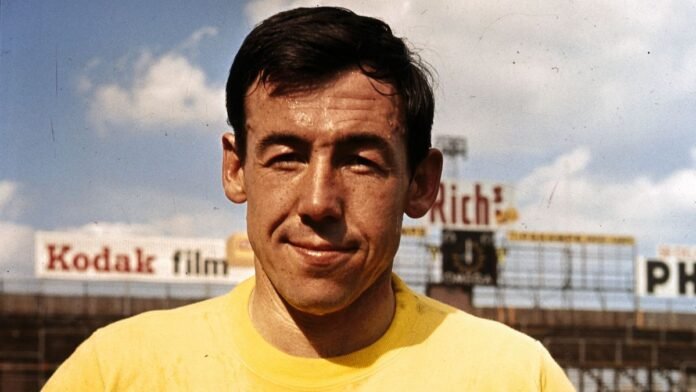

Shocking allegations have resurfaced regarding England’s goalkeeper, Gordon Banks, suggesting that he may have been deliberately poisoned by the CIA during the 1970 World Cup in Mexico. Banks fell ill just before England’s crucial quarter-final match against West Germany, which he ultimately missed, leading to widespread speculation that his absence contributed to England’s defeat. Initially attributing his illness to a tainted bottle of beer, Banks’ mysterious ailment has now prompted a former BBC reporter, Gabriel Gatehouse, to investigate the potential CIA involvement.
Gatehouse’s three-year probe, spanning from Stoke-on-Trent to Mexico and delving into declassified government archives, has uncovered compelling evidence that lends credibility to the poisoning theory. The investigation was spurred by Ed Jervis, Banks’ grandson, who shared the account with Gatehouse. Notably, a senior US senator, reportedly briefed by the CIA, hinted at the agency’s role in sabotaging Banks during the World Cup. This revelation was further supported by football writer Brian Glanville’s assertions in his 2007 book, suggesting foul play in Banks’ illness.
The narrative gains complexity with Bob Oxby, a football journalist, disclosing a conversation with his cousin, US Senator Stuart Symington, who allegedly implicated the CIA in Banks’ sickness and England’s subsequent defeat. The suspicion is rooted in the CIA’s purported interest in Brazil’s success at the tournament due to geopolitical motivations of supporting the Latin American country during the Cold War era.
Despite skepticism surrounding the plausibility of such a covert operation, Gatehouse’s findings point to a CIA memo from 1971 acknowledging the political significance of the World Cup and Brazil’s dictatorship at the time. While some, like team doctor Neil Phillips, attribute Banks’ illness to dietary indiscretion, others, including historian Grant Bage, subscribe to the theory of CIA involvement, echoing longstanding rumors surrounding the incident.
Ultimately, Banks’ absence in that fateful match, leading to his replacement by Peter Bonetti, has remained a subject of debate and intrigue. The legendary Stoke City goalkeeper passed away in Madeley, Staffordshire, at the age of 81 in February 2019, leaving behind a legacy intertwined with the unresolved mystery of the alleged CIA poisoning during the 1970 World Cup.