
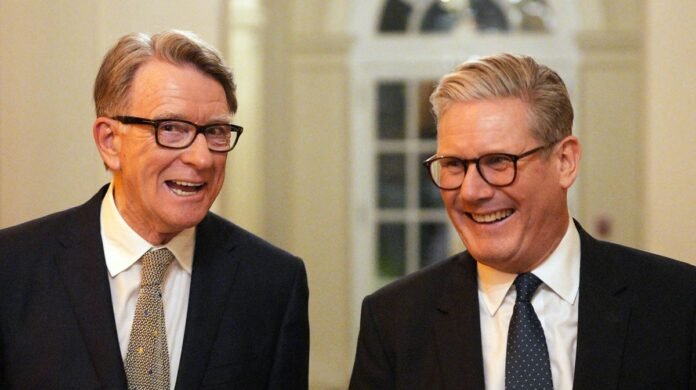

Over a thousand pages of documents have been revealed today regarding Keir Starmer’s appointment of Peter Mandelson as the UK’s ambassador to Washington. Among the disclosed materials are WhatsApp conversations between Lord Mandelson and top ministers, as well as emails and handwritten notes describing the situation at No10 as “beleaguered and bereft.”
This release marks the second set of documents made public by the government following Lord Mandelson’s dismissal from the ambassadorial role due to his connections with Jeffrey Epstein. Despite some redactions in the files, Chief Secretary to the Treasury, Darren Jones, ensured that none were made without approval from Parliament’s Intelligence and Security Committee.
The Mirror has analyzed the documents to highlight key revelations and discussions. One notable document from March 31 reveals that the Cabinet Office requested information from Lord Mandelson’s personal phone, which he declined to provide, stating that the government had no further recourse to search his personal devices.
In a conversation with Cabinet minister Pat McFadden, Lord Mandelson criticized the operation at No10, emphasizing the need for a comprehensive overhaul and a clear sense of direction. He expressed concerns about the lack of a cohesive team and leadership at the heart of the government.
In additional communications, Lord Mandelson expressed gratitude for his appointment as ambassador and stressed the importance of teamwork in navigating complex international relations, particularly with the Trump administration and issues involving China.
Further exchanges between Lord Mandelson and Pat McFadden revealed apprehensions about internal political dynamics, including maneuverings by figures like Gordon Brown and Angela Rayner, which were viewed as destabilizing for Keir Starmer’s leadership.
The documents also shed light on discussions about potential gifts for US President Donald Trump, with suggestions for a personalized ministerial red box. Lord Mandelson expressed frustration over complications in obtaining the gift, likening the situation to a plot from a political satire.
Additionally, the communications revealed Lord Mandelson’s aspirations to become Chancellor of Oxford University and his interactions with various ministers, showcasing his efforts to garner support and navigate political challenges.
Throughout the exchanges, Lord Mandelson expressed opinions on various policy issues, internal dynamics within the government, and personal matters, providing insight into his perspectives and interactions with key figures in the political landscape.