
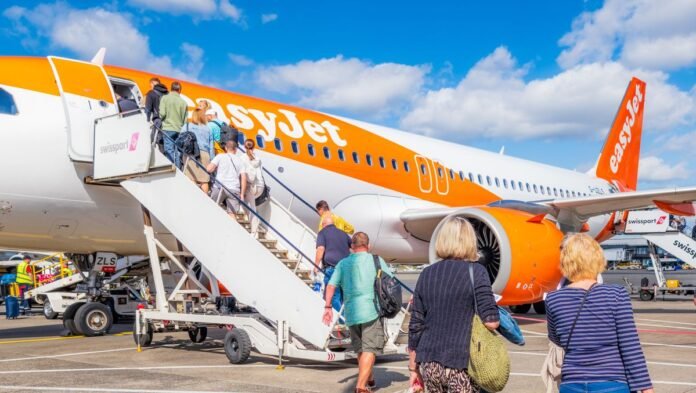

Shares of easyJet surged following the rejection of a takeover proposal by US investment firm Castlelake. The UK-based budget airline dismissed the bid as “highly opportunistic” and confirmed no discussions had taken place with the potential acquirer. On Monday, easyJet’s stock price rose by up to 13%, with Castlelake’s interest becoming public after the London stock market closed on Friday.
Castlelake, holding a 2.14% stake in easyJet, stated its preliminary consideration for a bid but had not engaged with the airline’s board yet. The US firm disclosed that any potential offer would be no lower than 403.23p per share. easyJet attributed the timing of the bid to its temporarily subdued share price due to concerns over the Middle East conflict’s impact on the aviation industry.
Despite acknowledging the regulatory and operational challenges associated with a takeover, easyJet emphasized its financial strength and commitment to achieving over £1 billion in profits in the medium term. The company stated its obligation to maximize shareholder value and expressed readiness to evaluate any formal proposal from Castlelake before the UK takeover deadline of June 26.
Castlelake, led by executive chairman Rory O’Neill, manages assets worth £27 billion and has a history of involvement in airline acquisitions, including talks with Spirit Airlines and previous engagements with Scandinavian Airlines. Analysts noted Castlelake’s financial capability for an easyJet bid but deemed a full acquisition unlikely due to European and British regulatory constraints.
With strategic airport slots and attractive market positions, easyJet remains a target for potential acquirers seeking expansion opportunities. However, concerns over competition challenges, particularly from major airline groups like British Airways-owner IAG, have been raised. Market analysts pointed out easyJet’s undervaluation and performance issues as factors contributing to Castlelake’s interest in the airline.
The management of easyJet faces pressure amid external challenges, including the Middle East conflict and fuel price uncertainties. Shareholders are cautioned against accepting a bid unless it offers substantial compensation, as the airline navigates a challenging market environment. The company’s leadership may face calls for significant changes to address its competitive position relative to rivals like Ryanair.