
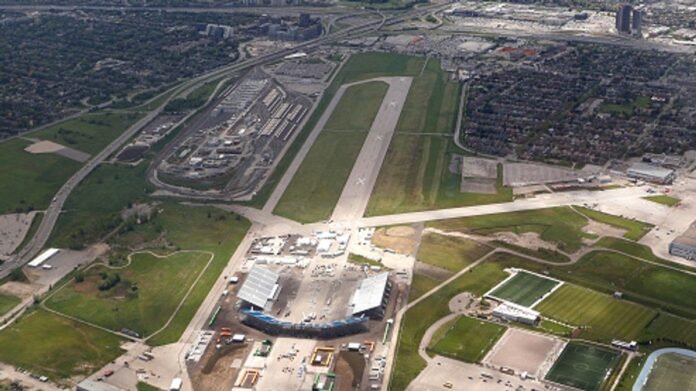

An abandoned airport in Toronto, Canada, is on track to be redeveloped into a £22 billion city for an estimated 50,000 residents. The former Downsview Airport, which ceased operations in 2024, is set to undergo a $30 billion transformation to create a new community that includes homes, shops, schools, and parks over a span of more than 30 years.
Dubbed as YZD, this ambitious project is considered one of the largest urban redevelopment initiatives in North America. A key feature of the plan involves converting a 1.24-mile former runway into a central park that will connect various neighborhoods within the development.
Recent revisions to the Downsview West District section of the project have refined proposals for a mixed-use community around Downsview Park TTC and GO station. The updated plans, developed by firms Urban Strategies, Trophic Design, and ERA Architects, aim to enhance the overall district framework based on feedback received.
YZD is identified as a significant urban transformation area on the continent. The project’s initial phase, Downsview West, emerged in 2024 and represents the first major district led by Canada Lands north of Downsview Park.
In line with the latest submissions to the City of Toronto, the development will be divided into three sections: Station Quarter, Heart at the Crossroads, and the Mews neighborhood. The tallest structures will be concentrated near transit hubs, with towers reaching a maximum height of 197 meters.
The former Downsview Airport site, historically used for warplane production during World War II and later by an aerospace company in the 1990s, will now undergo a comprehensive redevelopment led by Northcrest Developments. The CEO of the company, Derek Goring, emphasized the importance of preserving existing buildings to add character and uniqueness to the evolving cityscape.
The proposed development aims to deliver approximately 8,800 residential units, including 20% designated as affordable housing, along with a mix of employment, retail, institutional, and community facilities. The plans also introduce the concept of Depot Mews as a shared street space.
Derek highlighted the sustainability aspect of the project, emphasizing the carbon benefits of retaining existing structures rather than demolishing and rebuilding entirely new ones. This approach aligns with the overall goal of creating a vibrant and sustainable urban environment in the redeveloped area.