
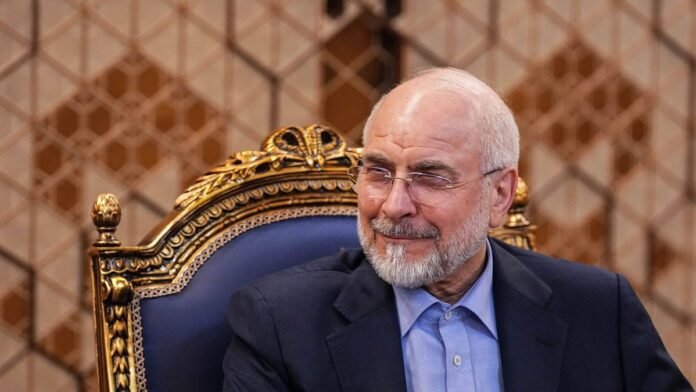

Iran’s lead negotiator has scorned the peace treaty as a significant failure on the part of the United States after it was officially signed. The US has made public the full content of the Memorandum of Understanding in advance of the scheduled signing later today.
The accord involves an extension of the ceasefire, the opening of the Strait of Hormuz, and aims to bring the conflict to a conclusion within four months. The signing of the peace deal was done digitally and is now in effect. Both nations have a 60-day window to demonstrate their commitment to complying with the terms outlined in the agreement.
Despite this, Iran’s chief negotiator has labeled the deal as a fiasco for the US. Mohammad Bagher Ghalibaf expressed his views on state television, stating that the agreement highlights the failures of the US and will be judged by the people. He reaffirmed that Tehran will impose charges on ships passing through the Strait of Hormuz after the initial 60-day period mentioned in the memorandum of understanding.
The vice president is set to travel to Switzerland this Friday to finalize the memorandum of understanding with Iran to resolve the Middle East conflict. President Trump, aged 80, will return to the US from the G7 summit instead of staying in Europe.
There have been concerns raised by critics about whether Vance has been designated to take responsibility in case the agreement collapses. During the summit in France, Trump was directly asked about the vice president’s role in the deal. In response to a question from a Fox News reporter, Trump jokingly acknowledged the possibility of attributing success or failure to the vice president.
Before the agreement’s details were disclosed, the vice president mentioned that negotiators from Qatar and Pakistan, who aided in brokering the deal, had requested a delay in releasing the full text. Vance emphasized that the deal is beneficial for the American people and praised it as a step towards halting terrorism funding and nuclear weapon pursuits by Iran while potentially reintegrating them into the global economy.