
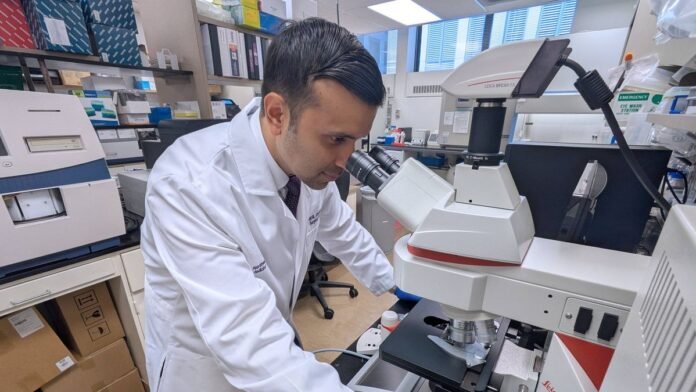

A new, highly sensitive blood test has been developed to detect minute traces of a deadly form of cancer. This test targets a key genetic mutation linked to pancreatic cancer, which is often missed by traditional screening methods. The groundbreaking test, conducted by researchers at Northwestern University Feinberg School of Medicine in Chicago, showed promising results in identifying signs of cancer in patients with localized pancreatic cancer.
The study focused on 106 patients with localized pancreatic cancer, tracking them from diagnosis through treatment. The test, known as digital droplet PCR (ddPCR), proved to be far more effective in detecting cancer indicators compared to standard next-generation sequencing tests (NGS). Even after chemotherapy and surgery, ddPCR continued to detect cancer in a majority of patients, while NGS and conventional testing methods fell short.
The findings from this research, published in Clinical Cancer Research, are significant as they highlight the potential of the blood test to improve survival predictions and identify high-risk patients who may have been overlooked by current testing approaches. The study showed that patients with detectable tumor DNA had a shorter average survival time compared to those who tested negative.
Lead researcher Professor Akhil Chawla emphasized the importance of this new screening tool in the era of targeted therapies for genetic mutations like KRAS, which play a crucial role in pancreatic cancer. The ability to track specific mutations through a simple blood test could revolutionize how high-risk patients are identified and monitored, potentially leading to earlier interventions and better outcomes.
Pancreatic cancer is known for its high mortality rate, even when diagnosed early. The challenge of detecting residual disease and monitoring treatment effectiveness in these patients has spurred the development of more advanced and precise diagnostic tools like ddPCR. By detecting circulating tumor DNA, liquid biopsies offer a non-invasive and repeatable method for tracking cancer progression and response to treatment.
The study’s results underscore the significance of accurate cancer detection in improving patient outcomes and tailoring treatment strategies. The potential of this innovative blood test to identify hidden cancer indicators and guide personalized care for pancreatic cancer patients marks a significant advancement in oncology research.