
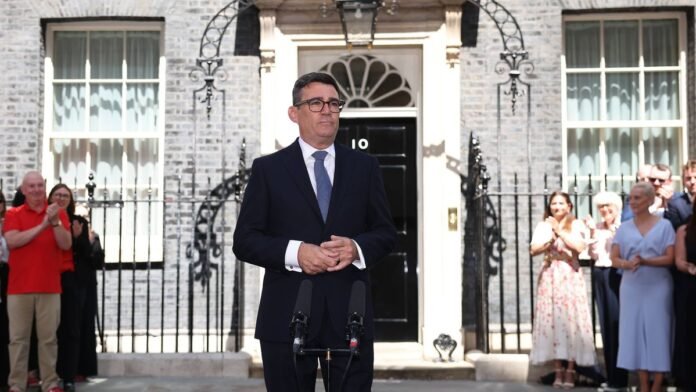

Andy Burnham was sworn in as the seventh Prime Minister of Britain within a decade. His first day in office began with an audience with the King at Buckingham Palace, followed by his inaugural address outside No 10. Burnham promptly announced his new Cabinet lineup.
Having recently returned to Parliament after serving as Mayor of Greater Manchester, Burnham was officially elected as the Leader of the Labour Party. The formal transition occurred after Keir Starmer resigned, leading the King to invite Burnham to form a new government.
In his opening speech, Burnham emphasized his commitment to easing the financial burdens on families, addressing homelessness, and revitalizing British industries. He expressed the need for a fresh political and economic approach, highlighting the importance of restoring stability to the nation.
Key appointments in Burnham’s Cabinet included Sir John Healey as Chancellor of the Exchequer. Other notable changes included Ed Miliband as Foreign Secretary, Yvette Cooper in the health portfolio, and Angela Rayner as Housing Secretary. Louise Haigh was appointed as First Secretary of State and Chancellor of the Duchy of Lancaster.
Former health secretary Wes Streeting, who endorsed Burnham’s leadership, was named as the new Defence Secretary. Several senior officials retained their positions, such as Transport Secretary Heidi Alexander and Home Secretary Shabana Mahmood.
Shortly after assuming office, Burnham engaged in discussions with global leaders including Donald Trump, Volodymyr Zelensky, Emmanuel Macron, and Mark Rutte. EU President Antonio Costa congratulated Burnham and expressed optimism for continued cooperation between the UK and the European Union.
For the latest political updates, readers can follow the live blog on Andy Burnham’s premiership speech.