
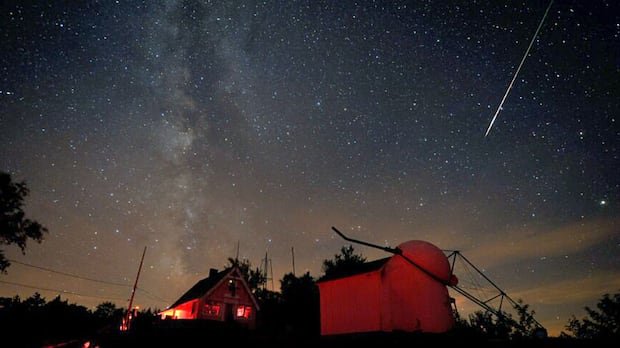

In August, skywatchers can enjoy the annual Perseid meteor shower, known for its abundance of bright meteors and favorable viewing conditions. This year, the peak of the Perseids coincides with a new moon, enhancing visibility without interference from moonlight.
Astronomer Peter Brown anticipates a high number of Earth-grazing meteors during this year’s shower, making for a spectacular show. The best viewing time is around midnight Eastern Daylight Time, with a potential of up to 120 meteors per hour, though actual visibility may vary based on location and conditions.
The Perseids began on July 17, leading up to the peak on August 12-13. Meteor enthusiasts can start observing before the peak night, as meteor activity increases gradually. Choosing a clear, dark-sky location away from light pollution is essential for optimal viewing.
The radiant point for the Perseid meteors lies in the Perseus constellation, but meteors can streak across the entire sky, offering a captivating display. Additionally, other meteor showers like the southern delta Aquariids, alpha Capricornids, and kappa Cygnids are active, adding to the celestial spectacle.
In addition to the Perseid meteor shower, a partial solar eclipse will occur on August 12, visible in certain regions such as Greenland, Iceland, Spain, and a small part of Portugal. While the total eclipse won’t be visible from Canada, observers in some areas may witness a partial eclipse, with the extent varying across different locations.
For those interested in observing the partial solar eclipse, it is crucial to use approved solar eclipse glasses for eye safety. Astronomers emphasize the educational value of eclipses, showcasing the dynamic interactions of Earth, moon, and sun in the celestial dance of the cosmos.