
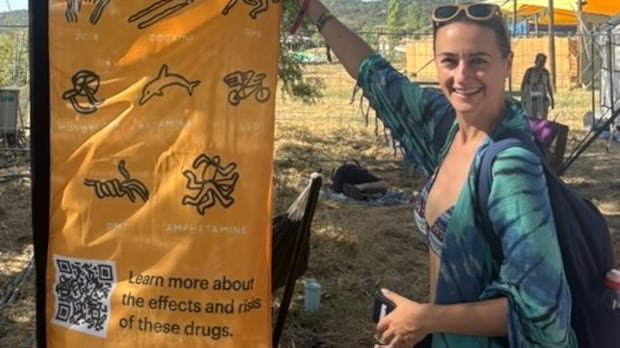

Summer music festivals have long been popular venues for individuals to experiment with psychedelics and other substances.
A team of researchers is currently investigating the harm reduction practices employed at these events and what insights can be gained from them.
Lead researcher Erika Dyck, a history professor at the University of Saskatchewan and a Canada Research Chair specializing in the history of health and social justice, has dedicated the past two decades to studying psychedelics.
According to Dyck, music festivals, where drug usage is prevalent, often serve as spaces for implementing harm reduction strategies despite their recreational nature.
“Although they are primarily recreational environments, they also serve as places where individuals strive to take care of one another and minimize potential harms,” Dyck explained to CBC’s Saskatoon Morning.
One of the project’s research team members is Kenneth Tupper, an adjunct professor at the School of Population and Public Health at the University of British Columbia.
Tupper highlighted that drug testing initiatives initially gained traction in Canada through music festivals.
He pointed out that drug checking practices gained prominence in response to the toxic drug crisis, particularly in British Columbia, which was declared a public health emergency around 2016.
Notably, the British Columbia Centre on Substance Use introduced a portable FTIR spectrometer around 2017 for drug testing purposes at festivals like Shambhala and Bass Coast.
The inaugural edition of the Regina Exchange Folk Festival emphasized the importance of harm reduction and safety measures in its planning.
Zandra Kaszas, the festival’s artistic director, emphasized the festival’s readiness for any unforeseen incidents by incorporating harm reduction strategies and safety precautions.
Aside from standard safety measures such as security and hydration stations, the festival also had the Nēwo Yōtina Friendship Centre (NYFC) present with a naloxone station to address potential overdoses.
Tupper stressed the significance of drug testing services in providing individuals with certainty before making decisions regarding drug consumption.
He also highlighted the importance of counseling services for individuals to navigate their drug experiences effectively, potentially saving lives.
The ongoing research project aims to document the various harm reduction strategies employed at festivals to create a valuable repository of information for future reference.
Dyck emphasized the importance of preserving these experiences in an archive to contribute to future discussions and decision-making processes.