
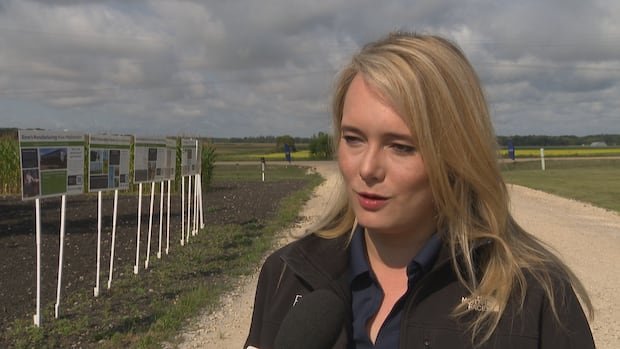

Amid this season’s unpredictable weather patterns, Manitoba farmers convened in Grosse Isle on Wednesday to explore the utilization of new technologies in mitigating harvest risks and adapting to extreme weather conditions.
Jacqueline Keena, the CEO of the Enterprise Machine Intelligence and Learning Initiative (EMILI), a Manitoba-based non-profit organization focusing on agricultural innovations, emphasized the increasing variability and severity of weather events this year. EMILI hosted Agronomy Day at its Innovation Farms Grosse Isle location, bringing together industry experts, entrepreneurs, farmers, and agronomists to delve into digital agricultural tools.
The event, held northwest of Winnipeg, aimed to showcase how these technologies can be integrated into real farm settings using data and feedback. The theme of this year’s event was “weathering change,” highlighting the impact of the season’s excessive rainfall on crop health and future harvests.
Following a significant rainfall event at Rutherford Farms, with 25.5 centimeters of rain in one evening, Keena noted the immediate adjustments made to farming plans. Fields were submerged, impacting the 5,500-acre site, which is part of the group’s 10,000-acre farm in MacGregor.
A key focus of discussion was the Crop Intelligence tool, a data-driven agronomic tool that functions as a weather station capturing data on precipitation, temperature, and environmental conditions. It integrates with a soil probe to monitor soil moisture levels throughout the season, aiding in predicting crop yields and facilitating informed management decisions.
Charles Fossay, a veteran farmer near Starbuck and director at Keystone Agricultural Producers, highlighted the utility of tools like soil probes, particularly for irrigation farmers. Despite the abundance of data available, he emphasized the practicality of such innovations in optimizing crop management and irrigation practices.
Reflecting on EMILI’s evolution over the past decade, Keena noted the shift in industry perceptions towards embracing artificial intelligence and new technologies for agricultural advancements. The current focus lies in demonstrating the tangible benefits of these technologies to farmers like Fossay, emphasizing the importance of full-scale testing before widespread adoption decisions are made.