

Canada and the United States are still at odds as talks persist over a potential tariff agreement before the looming deadline set by U.S. President Donald Trump, as per insiders. The federal government reportedly views a tariff deal as not imminent due to significant disagreements between the two sides, leading to a considerable distance on unresolved issues.
Canada’s Trade Minister Dominic LeBlanc updated provincial and territorial counterparts on the negotiation progress last Friday. Additionally, he provided a separate briefing to members of the prime minister’s advisory committee on Canada-U.S. economic relations. While sources are knowledgeable about the briefings, they are not authorized to speak publicly.
Trade discussions between Canada and the U.S. have intensified following Trump’s threat to impose a hefty 50% tariff on numerous Canadian goods starting August 19. A source familiar with the talks mentioned dwindling optimism on the Canadian side and the U.S. remaining firm on their latest proposal. The American offer includes reducing sectoral tariffs on automobiles to 12.5%, a proposition deemed insufficient by the Canadian side.
Quebec’s Economy Minister Bernard Drainville, briefed by LeBlanc, remarked on the significant gap that persists between Canada and the U.S. Drainville expressed doubt about reaching an agreement at present and noted no sign of Trump postponing the application of the 50% tariffs.
Erin O’Toole, former Conservative leader and committee member, echoed the sentiment, describing the positions of the two nations as still widely divergent. O’Toole emphasized the necessity of a mutually acceptable deal that respects both countries’ workers.
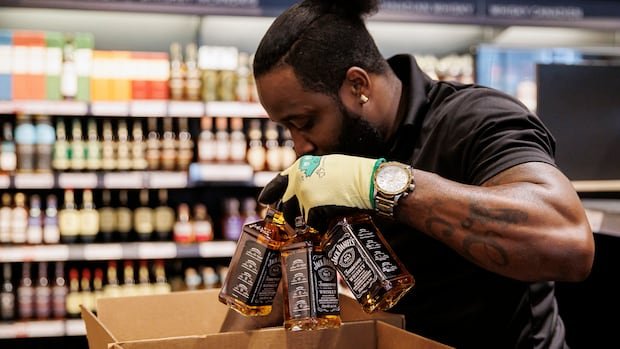
The federal government has instructed provinces to prepare for the possible reintroduction of American alcohol on shelves if a tariff agreement is reached. Additionally, provinces and territories have been asked to be ready to suspend retaliatory procurement rules favoring Canadian suppliers in the event of a deal.
Trump’s grievances about provincial liquor bans, dairy import quotas, and auto tariffs have led to the threat of new tariffs. The ongoing negotiation framework involves the U.S. refraining from imposing new levies, while reducing existing sectoral tariffs on Canadian steel, aluminum, autos, and forest products without complete elimination. In return, Canada would need to address the three areas of concern cited in Trump’s ultimatum.
Quebec Premier Christine Fréchette emphasized the critical need to preserve the supply management system safeguarding Canadian dairy, a contentious issue for the U.S. Trump has repeatedly raised concerns about the access of U.S. dairy farmers to Canada’s market.
Regarding the talks’ progress, U.S. Trade Representative Jamieson Greer described them as constructive but highlighted Washington’s push to eliminate retaliatory measures like liquor bans. Industry sources indicated the approaching August 19 deadline as a crucial moment, suggesting little appetite for further negotiations if the 50% tariffs are imposed.
The booze bans, initiated by Canada in response to Trump’s tariff threats, have severely affected U.S. alcohol exports to Canada. U.S. spirit-makers have reported significant financial impacts, while American wine sales in Canada witnessed a substantial decline in revenue.
Ontario Premier Doug Ford expressed willingness to reintroduce U.S. alcohol if a fair deal benefiting Ontario’s key sectors is achieved. He underscored the adverse effects of tariffs on both nations and urged Americans to consider the consequences during upcoming elections. Despite potential availability of American alcohol, some Canadians have indicated reluctance to purchase it.
[End of the rewritten article]