
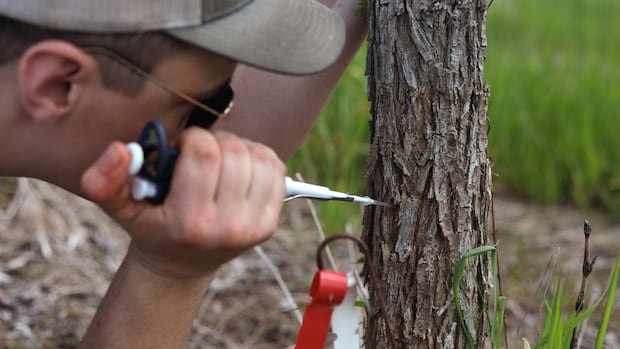

Scientists in Vermont have been intentionally infecting thousands of trees with Dutch elm disease this summer. This unusual approach is part of a research initiative by the U.S. Forest Service and the Nature Conservancy to assess the potential resistance of a new generation of elms bred from disease survivors. The aim is to revive regions once abundant with majestic elms, such as city streets and riverbanks, which have been decimated by the fungus carried by bark beetles in the U.S. and Canada over the years.
Gus Goodwin, a senior conservation planner at The Nature Conservancy, expressed the devastating impact of the elm tree loss over the years. The experiment in Vermont will determine if these efforts can lead to the development of elm strains that are resilient to Dutch elm disease (DED). Similar projects are also underway in Canada to combat the increasing threat posed by the disease.
In Fredericton, known as the “City of Stately Elms,” the once-thriving elm population succumbed to the disease in the 1960s and 70s, resulting in the loss of around 10,000 trees, with only about 1,000 mature elms remaining. Professor Anthony Taylor from the University of New Brunswick noted the ongoing challenges faced by surviving elms, as the disease continues to impact trees on his property.
The spread of Dutch elm disease occurs when bark beetles carrying the fungus lay eggs in infected trees, creating new carriers that can transmit the disease to healthy trees. To control the disease, infected elms are promptly removed. However, past practices of removing healthy elms along with infected ones may have unintentionally impacted the population’s ability to withstand the disease.
The threat of Dutch elm disease has extended to new areas in recent years, with cities like Edmonton and Saskatoon experiencing increasing cases. Municipalities are actively working to remove infected trees and prevent further spread by engaging residents in tree care practices. While the disease poses challenges, efforts to restore disease-resistant elms are crucial for maintaining urban greenery and combating climate change effects.
Research initiatives in Vermont, Guelph, and Fredericton aim to enhance elm tree resilience by breeding and cloning disease-tolerant trees. These long-term projects involve testing thousands of elm tree seedlings for resistance to Dutch elm disease. If successful, these efforts could enable elm trees to coexist with the disease, mirroring the resilience observed in European elms. The ongoing research underscores the importance of preserving elm trees and their ecological benefits in the face of evolving environmental challenges.