
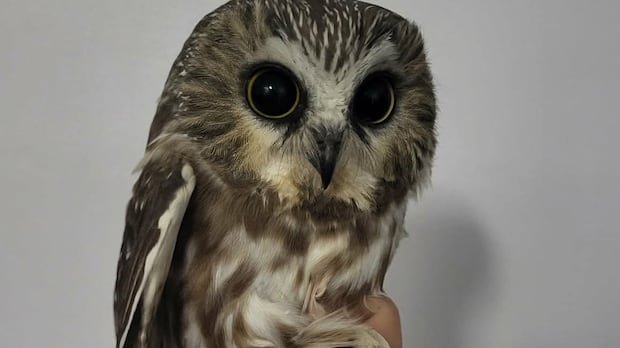

A surge in owl migration is keeping researchers at the Mugaha Marsh Banding Station busy as the birds pass through northern B.C. in unusually high numbers. Jeannine Randall, a bird biologist at the Mackenzie Nature Observatory, located around 200 kilometers north of Prince George, described this year as exceptional, with 266 owls captured so far, surpassing the typical count of 100 for the season.
Due to the influx, there was a shortage of the specialized tracking bands required to monitor the birds. The station faced difficulties as one of the band sizes, mainly used for saw-whet owls, was running low due to backorders from the bird banding office.
While reaching out to other organizations for assistance, it became evident that the owl boom was a widespread occurrence affecting multiple stations. The rise in owl numbers is believed to be linked to the abundance of small rodents this year, the primary prey of these birds, such as mice, deer mice, and voles.
Although the increased owl population at Mackenzie is positive, it may not reflect the overall trend for owl species in the province. Rémi Torrenta, a biologist with Birds Canada, highlighted that many owl populations have been declining over the past 25 years, including the northern saw-whet owls.
Torrenta explained that the current owl surge likely follows a well-documented four-year cycle, where a high owl population is succeeded by a crash in the rodent population the following year. This phenomenon, known as a mass eruption, forces owls to migrate south in search of food.
To monitor these trends, Birds Canada coordinates the Nocturnal Owl Survey, a citizen science initiative that relies on volunteers nationwide to track owl numbers each spring. The banding project at the Mackenzie Nature Observatory plays a crucial role in providing essential data for monitoring owl populations and migration routes.
Recently, the station recaptured an owl that was initially banded in Victoria in 2024, shedding light on the species’ travel patterns. Randall emphasized the importance of such research in understanding owl species and making informed management decisions.
The station’s efforts contribute to the broader scientific understanding of owl populations and migration behaviors, enabling better conservation strategies for these fascinating birds.