
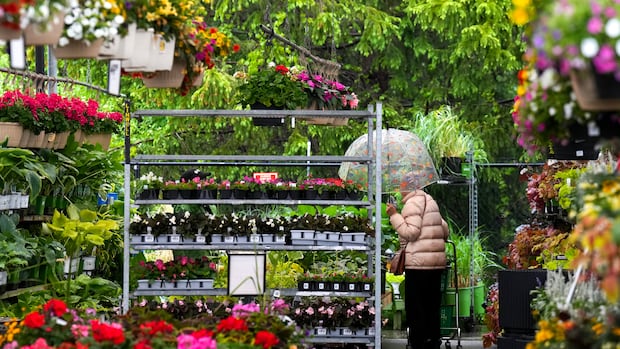

Cities across Canada are taking steps to prevent the sale of invasive plants in local garden centers, as advocates urge the federal government to implement a nationwide strategy for regulating the horticultural sector.
With invasive species posing a significant threat to biodiversity throughout the nation, local governments are increasingly attempting to address deficiencies in a regulatory framework that differs from one region to another. Canada has set an ambitious goal of halving the introduction and establishment rates of known invasive species by the year 2030.
The Canadian Coalition for Invasive Plant Regulation (CCIPR) is advocating for the establishment of a federal regulatory authority dedicated to the horticulture industry, along with the creation of a national database that catalogs invasive plants and assesses their risks across various regions.
“Even if we don’t outright ban them, it is crucial to inform the public about potential dangers,” stated CCIPR co-founder Cathy Kavassalis. “This approach is applied to other products, so we should extend it to plants as well. It’s simply a matter of common sense.”
The Canadian Food Inspection Agency oversees some invasive plants under the Plant Protection Act, while individual provinces and territories have their own laws concerning invasive species or weed control.
According to a statement provided to CBC News on Thursday, the CFIA noted, “The federal strategy is based on species and risk assessment rather than implementing a blanket ban on all plants deemed invasive in every area.” The CFIA has the authority to regulate the import, sale, possession, and movement of plants classified as regulated pests, including those sold for ornamental use.
They emphasized that regulatory actions are “part of the solution,” but managing invasive plants requires collaboration among provinces, municipalities, industry stakeholders, and organizations focused on invasive species.
“Any consideration for more extensive federal restrictions would be contingent on the specific risks posed by certain species and the powers provided under existing legislation,” the statement concluded.
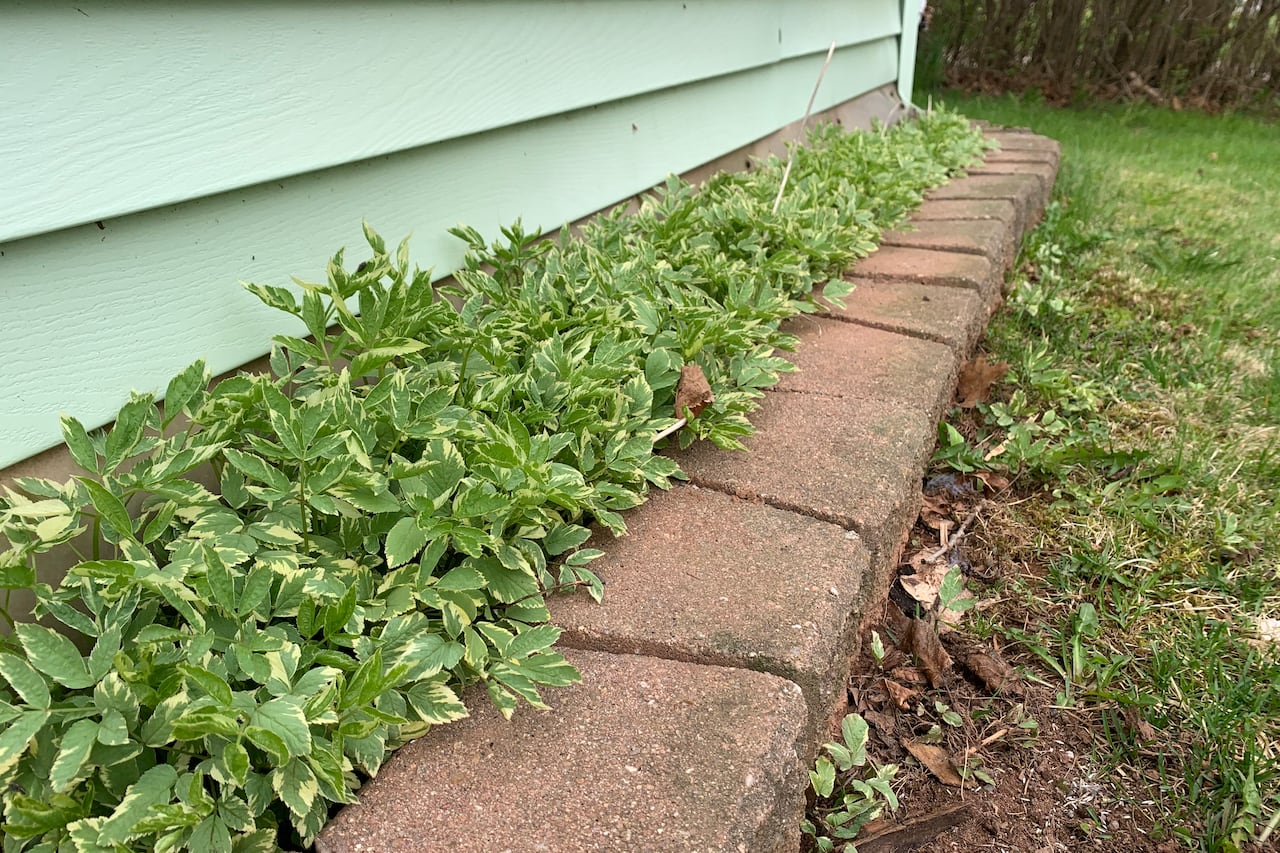
Goutweed, an invasive species, found in a garden in Clyde River, P.E.I. (Sara Fraser/CBC)
In July, the Nanaimo council adopted a motion to pursue changes to bylaws that would limit the sale of plants listed by the Invasive Species Council of B.C. Shortly thereafter, Surrey initiated a ban on sales from businesses including nurseries, major retail chains, and florists.
In May, London, Ontario’s environmental committee proposed that retailers selling invasive species provide customers with information at the time of purchase.
Kavassalis pointed out that issues that could be tackled at higher government levels are instead being relegated to local municipalities.
“These are all piecemeal solutions that, in many respects, waste considerable resources,” she remarked.
Nanaimo’s parks manager, Kirsty MacDonald, mentioned that invasive plants are already impacting the local ecosystem, with some potentially endangering human health.
Most local plant suppliers are aware of the issue, she noted, although invasive species can still be found in plant assortments or common varieties like English ivy.
“Prohibiting the sale of new introductions [of invasive plants] in residential areas is one approach,” she explained. “We need to explore multiple strategies to make progress.”
“All tiers of government must be involved in finding a solution,” she added.
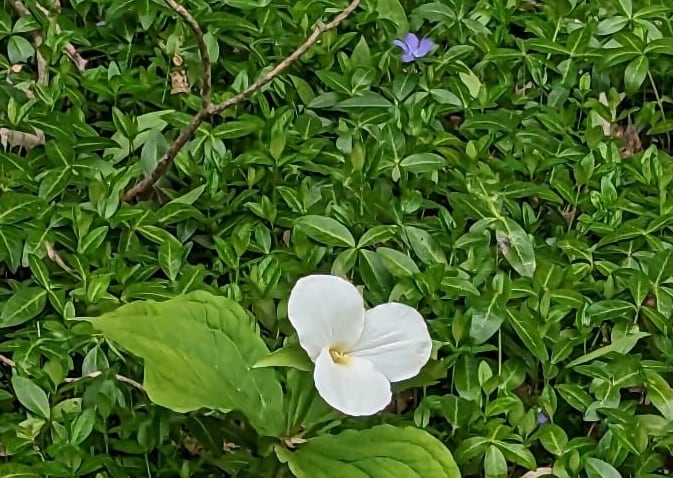
A white trillium surrounded by periwinkle, an invasive plant found in some stores, in Inglis Falls Conservation Area in Ontario. (Photo by Andy Fyon, supplied by CCIPR)
What advocates want from Ottawa
Kavassalis indicated that achieving the federal government’s 2030 target necessitates addressing the horticultural industry.
A 2021 research conducted by University of Massachusetts Amherst experts highlighted the sale of ornamental non-native plants as a “key pathway” for the introduction of invasive plants in the United States. A subsequent 2023 study indicated that plant nurseries could account for around 80 percent of invasive plant introductions in that country.
Kavassalis asserted that Canada faces the same challenge.
“Our gardens are indeed a significant source of environmental and economic harm,” she remarked.
The CCIPR advocates for a national database that would provide provinces, territories, retailers, and gardeners with a unified resource about which plants pose risks in various areas. Kavassalis also calls for invasive plants to be removed from shelves or distinctly labeled.
“It would fall outside the CFIA’s regulatory responsibilities to maintain a database of invasive plants nationwide, as not all of them are regulated under the CFIA,” the CFIA stated.
Implications of new regulations for nurseries
Jim Hole, a horticulture and agriculture expert who formerly owned Hole Greenhouses and Gardens in St. Albert, Alberta, mentioned that most garden centers would back initiatives aimed at curbing the spread of invasive plants.
When purple loosestrife was recognized as an invasive species in wetlands, he noted that his greenhouse ceased its sale.

A group of London residents is urging city council to mandate that garden centers alert customers about the purchase of invasive plants and pets. Brendon Samuels, a member of the city’s environmental stewardship and action community advisory committee, joined London Morning to provide more insights into the proposal.
With a vast array of plants available, Hole expressed that removing a particular species is unlikely to jeopardize a business.
“It’s not as if you think, ‘Oh no, there goes my business. That was a plant I relied on for profits,'” he commented.
He added that enhanced research, regulation, and public awareness could also benefit greenhouse operators and farmers investing time and resources in managing unwanted plants.
“The benefits are substantial if you can prevent even one additional invasive species from establishing,” he remarked.
The importance of gardeners
Native plant advocate and author Lorraine Johnson highlighted that consumers often lack awareness of which plants are invasive, while nurseries significantly influence the selections that people choose for their gardens.
She emphasized that the horticultural industry plays a “critical role” in the decline of biodiversity.
“Their primary focus is selling non-native plants, which are species that have not co-evolved with the insects we aim to support, or with the pollinators,” she stated.
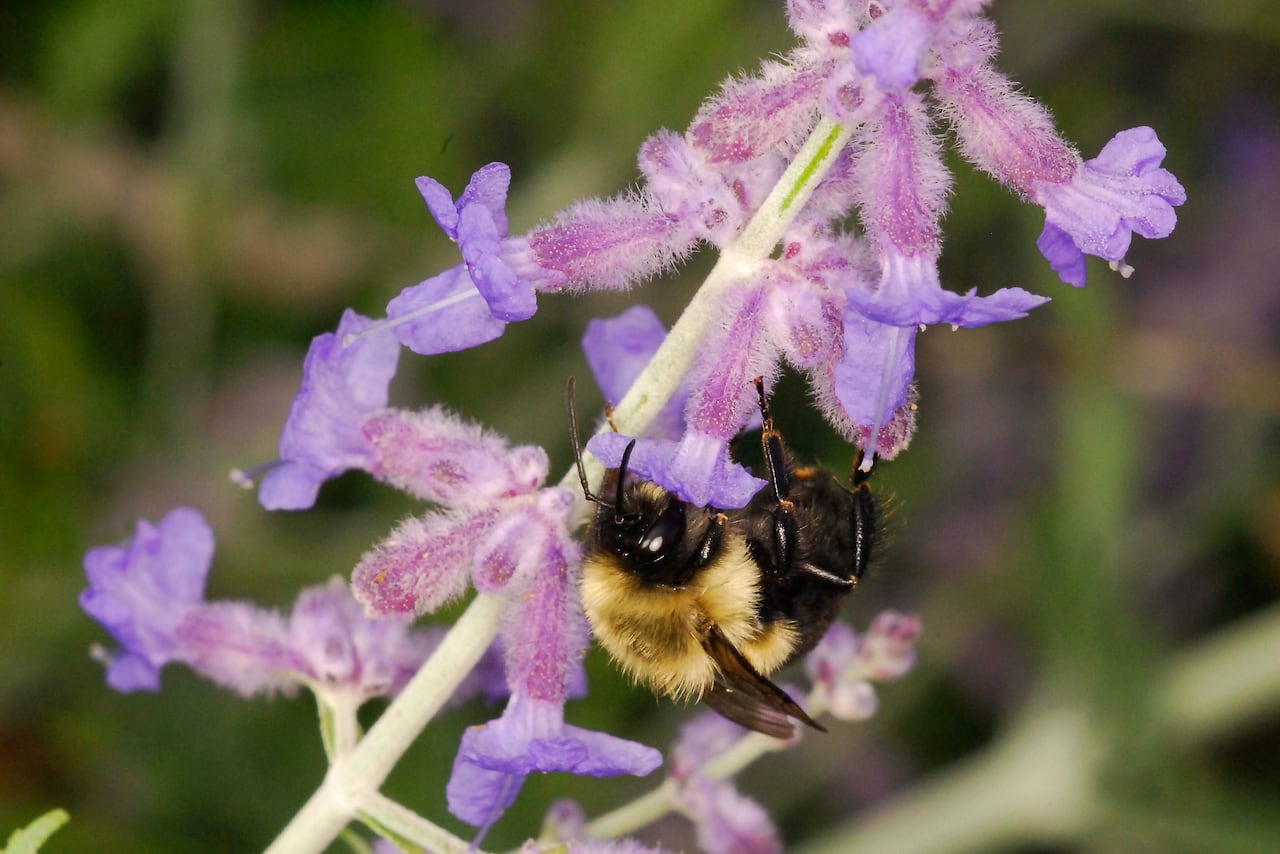
Native plant gardens are advantageous for pollinators, like bees, which are essential to ecosystems, according to Lorraine Johnson, a native plant advocate and author. (Daniel Thomas/CBC/Radio-Canada)
Kavassalis mentioned that regulating garden centers can assist gardeners in overcoming “plant blindness,” a phenomenon where all greenery appears equal.
“We need to encourage the public … to view the plants in their gardens not merely as decorative elements, but as integral components of the broader living ecosystem.”