
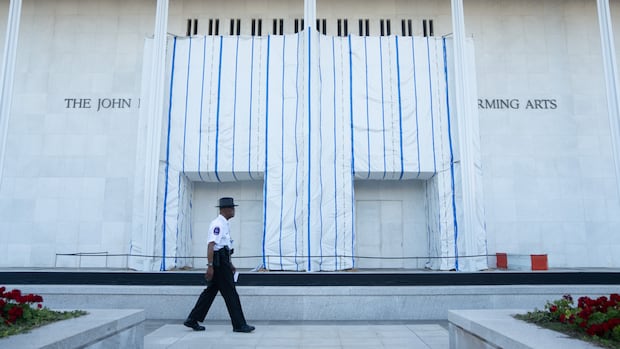

On Thursday, a federal judge in the U.S. mandated that the Kennedy Center must give a 30-day notice prior to undertaking any significant physical alterations to the structure, including the potential demolition, which has been threatened by President Donald Trump.
U.S. District Judge Christopher Cooper stated that his decision aims to “prevent any misunderstanding on that point, especially in light of recent developments,” such as the abrupt closure of the venue to the public on Wednesday.
Matt Floca, the executive director and chief operating officer of the Kennedy Center, explained that the renowned performing arts facility was temporarily closed due to “acute risks to public safety stemming from ongoing structural deterioration” of the aging building.
Floca indicated that the closure would last for a minimum of seven days to “evaluate existing safety concerns in areas of the main building showing severe structural degradation.”
Officials, including Floca, clarified that this temporary closure, which occurred without prior notice on Wednesday, is independent from a decision made on Tuesday by the Kennedy Center’s board to indefinitely close the performing arts center for repairs. This decision followed an inspection of the roof terrace canopy and a partial ceiling collapse earlier this month. Floca noted that the closure could be prolonged following an assessment next week.
The announcement regarding the closure was made in response to a lawsuit initiated by a Democratic congresswoman who is a trustee, seeking an emergency court session to prevent what she deemed the “unlawful closing” of the building.
Rep. Joyce Beatty, a Democrat from Ohio and an ex-officio member of the Kennedy Center board, has been actively working to prevent Trump’s name from being added to the building. Beatty confronted the Republican president verbally during a virtual board meeting on Tuesday.
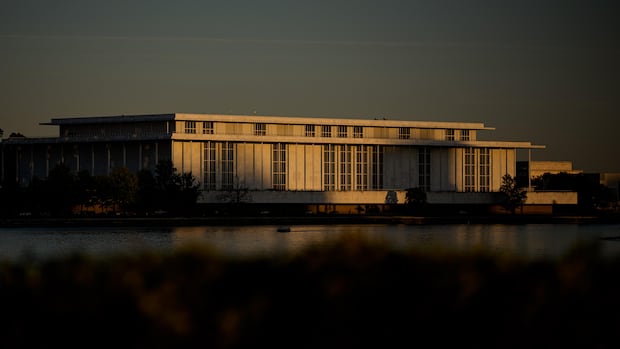
The Trump-aligned Kennedy Center board voted to close most of the performing arts venue just hours after a federal judge blocked the institution from returning President Donald Trump’s name to the building.
According to Beatty’s legal team, in a court filing on Thursday, the board’s justification for temporarily closing the Kennedy Center is merely a façade intended to mask a permanent shutdown. “The facts presented to the Court are deeply troubling,” they stated.
Cooper rejected a request from Beatty’s lawyers for a hearing to elucidate the board’s intentions and actions but concurred with their appeal to “make it abundantly clear” that his ruling prohibits any demolition of the building.
The board, which aligns with Trump and is chaired by him, voted to close the center after a federal judge prohibited the institution from restoring Trump’s name on the building.
Trump, who was appointed chairman of the Kennedy Center last year by loyal board members, remarked on Wednesday that his initiative to restore the aging structure merits acknowledgment, stating, “if we don’t take action, it will close down. It’s in very, very poor condition, extremely hazardous.”
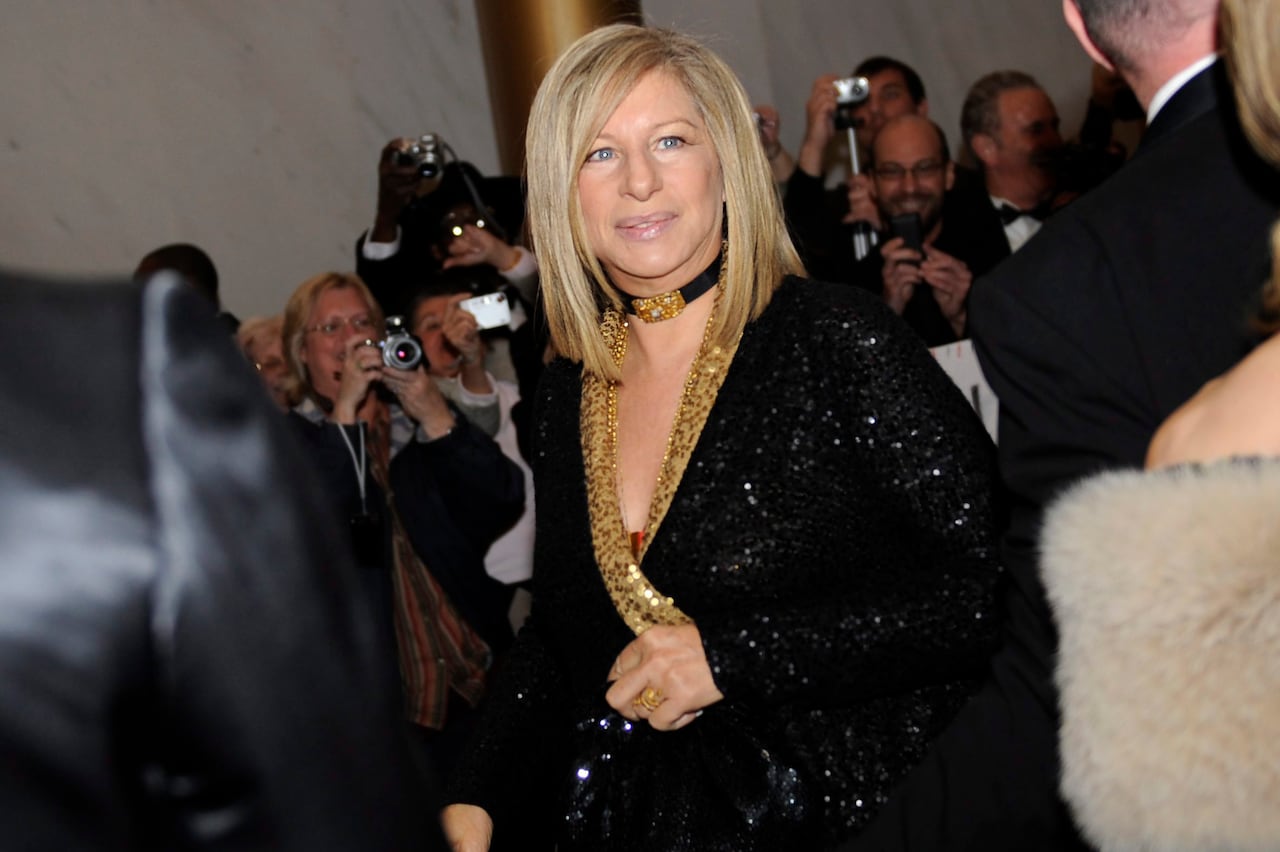
Barbra Streisand arrives for the Kennedy Center Honors in Washington on Dec. 7, 2008. (Jacquelyn Martin/The Associated Press)
Congress has allocated $257 million US for the repairs; however, Trump indicated that these would only proceed if the board was allowed to implement plans to add his name to the building.
Barbra Streisand, an honoree at the Kennedy Center in 2008, expressed her concerns on Thursday regarding the closure for repairs, deeming the surrounding controversy “galling and painful to witness.”
-
Fencing goes up around Kennedy Center as activists worry it will be demolished
-
Kennedy Center board votes to close after judge again blocks efforts to add Trump name to it
In August, the Kennedy Center board voted to inscribe Trump’s name on the building’s facade, which would read “The John F. Kennedy Center for the Performing Arts Restored and Renovated By President Donald J. Trump.” Additionally, if the Trump Kennedy Center Fund reached $100 million US, another inscription was to be added stating “Endowed by the Trump Kennedy Center Fund.”
The area in front of the Kennedy Center was also set to be renamed in honor of Trump.
All of these proposals were rejected on Tuesday by Cooper, who determined that no actions could take place “without the approval of Congress.”
In May, Cooper ruled that the Kennedy Center’s addition of Trump’s name was unlawful and ordered its removal. The institution’s leadership complied in June but left scaffolding and a tarp covering where Trump’s name had been displayed.