
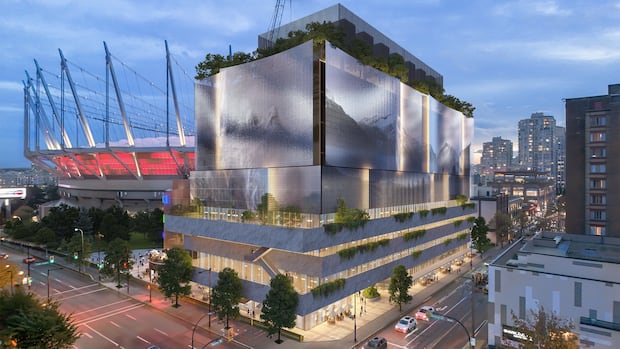

During a press event in May, Darren Entwistle, who was the CEO of Telus at the time, made a bold statement regarding two upcoming AI data centres set to be established in Vancouver.
“They’re going to be incredibly attractive,” he said with a smile, while announcing a collaboration with Westbank Corp.
However, the situation has turned out to be more of a fleeting romance.
This week, the telecommunications giant revealed it would no longer be participating in either of the projects.
“Telus has chosen not to move forward with the co-development of the two previously mentioned Vancouver data centres alongside Westbank,” stated a company spokesperson, who noted that the focus would now shift to enhancing an existing data centre located in Kamloops, B.C.
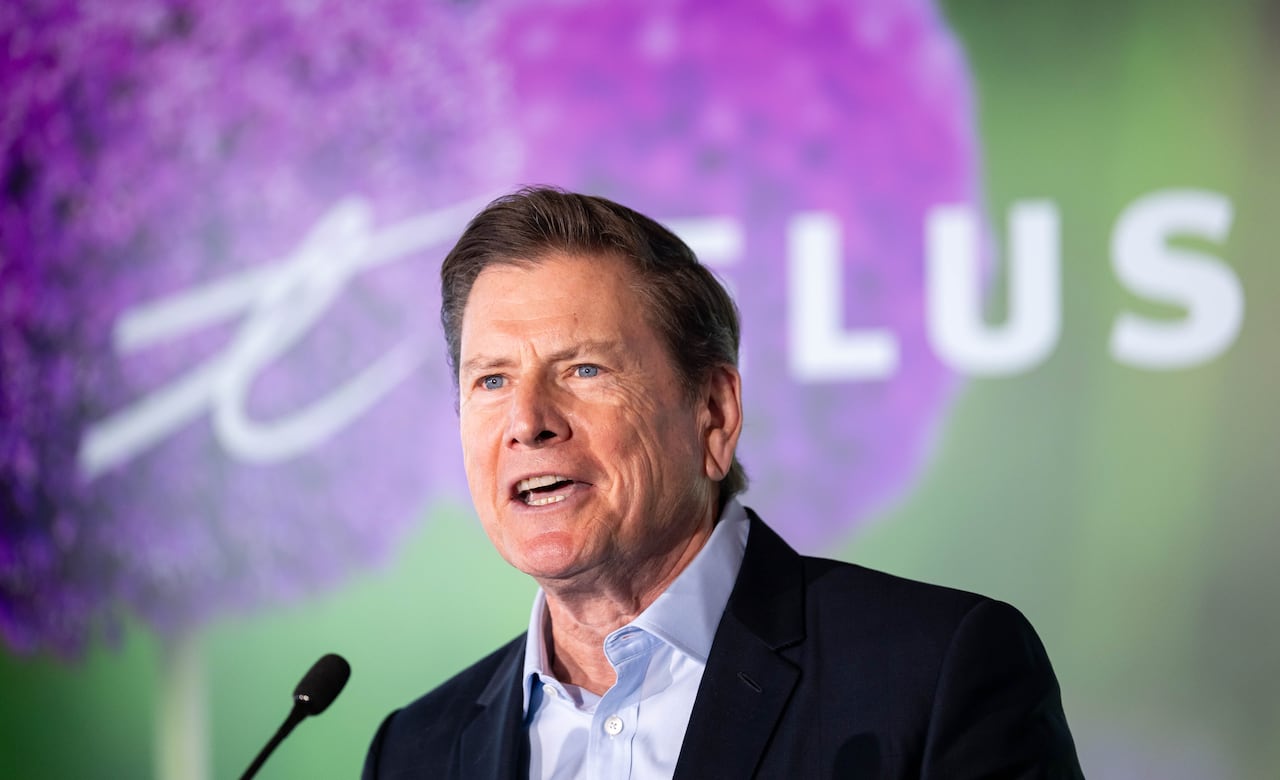
Former TELUS CEO Darren Entwistle, addressing an audience in Vancouver in May, referred to the new AI data centres as ‘incredibly attractive.’ (Ethan Cairns/CBC)
Westbank, on the other hand, seems to be moving forward without hesitation.
In a statement, a representative confirmed that a new partner had already been secured.
“We are continuing with the projects as scheduled, with a new partnership announcement expected in the forthcoming months,” the company stated.
The first of the planned centres, located in a former office building that once served as the headquarters for Hootsuite in the Mount Pleasant area, was set to launch by the end of this year.
A second facility intended for West Georgia Street in the downtown region was scheduled for completion in 2029.
Telus has not provided any explanation for its withdrawal from the projects, leaving ample room for speculation.
“I suspect Telus is worried about its reputation,” commented Vancouver Councillor Lucy Maloney.
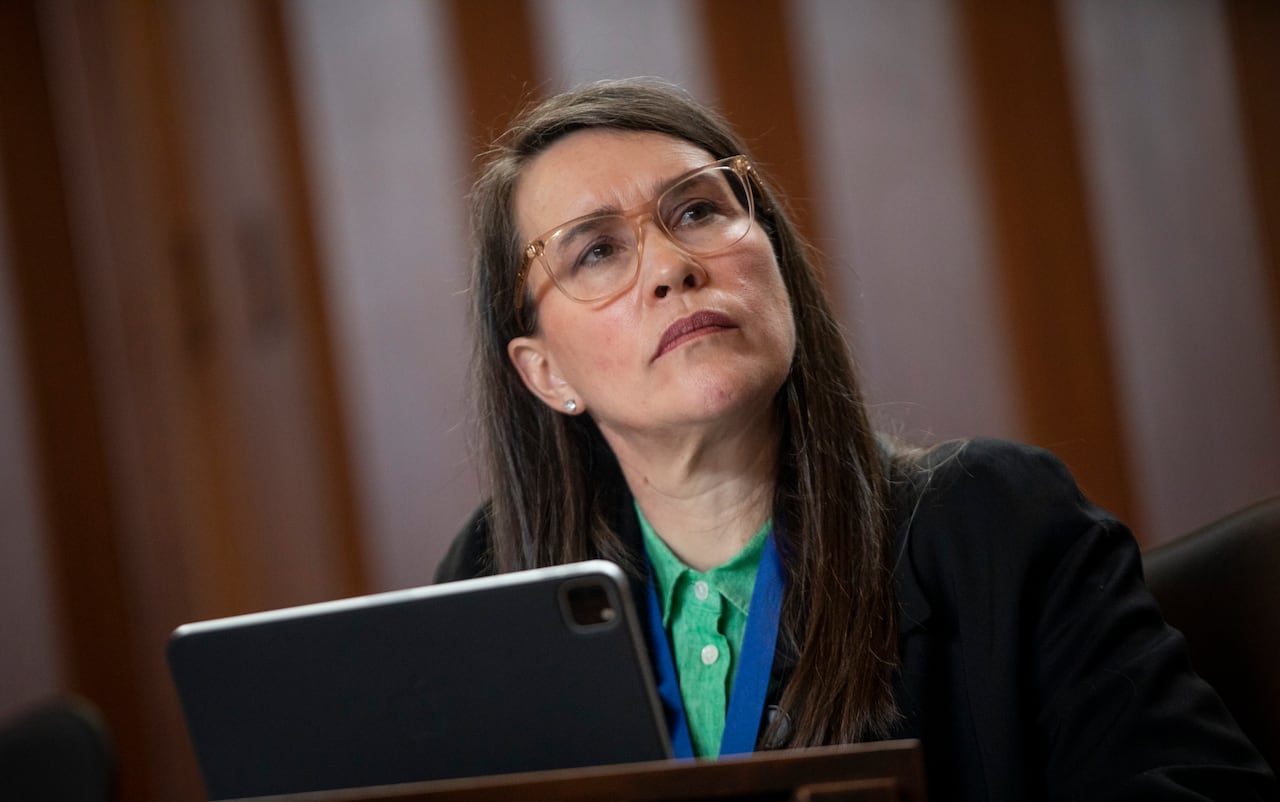
Vancouver Councillor Lucy Maloney believes Telus is concerned about its reputation. (Ben Nelms/CBC)
“I’m sure they are evaluating the return on investment in relation to the difficulties of addressing public concerns regarding AI.”
The newly elected council in Vancouver is set to review and discuss a motion from Maloney aimed at tightening approval procedures for AI data centres during a meeting this week.
“All I am asking staff to do is to help propose a suitable and comprehensive regulatory framework that will provide us with the necessary information to evaluate applications for rezoning related to AI data centres,” she stated.
“This is crucial because we understand that AI data centres can have significantly larger impacts compared to other industrial and commercial activities.”
The motion did not receive support when it was previously presented to the prior council, but Maloney is optimistic that the newly elected group will be more favorable.
“I anticipate more success,” she remarked.
“It’s widely recognized that Silicon Valley’s motto is to act swiftly and disrupt, but such an approach is certainly not suitable for any governmental regulator or authority.”
‘A lot of uncertainty’
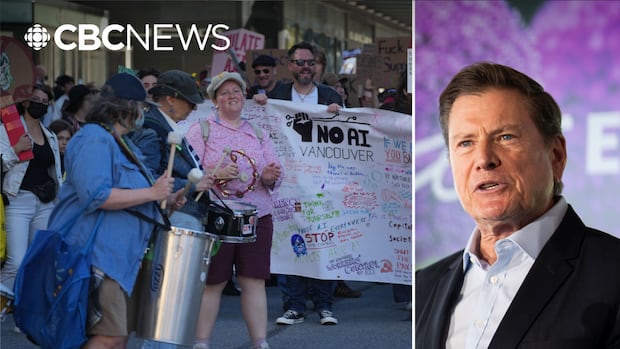
The grassroots protest organization No AI Vancouver has significantly contributed to the organized opposition against the data centres, claiming they are inadequately regulated and are being expedited without sufficient community engagement.
The group has organized several protest events across the city throughout 2026, with some drawing hundreds of participants.
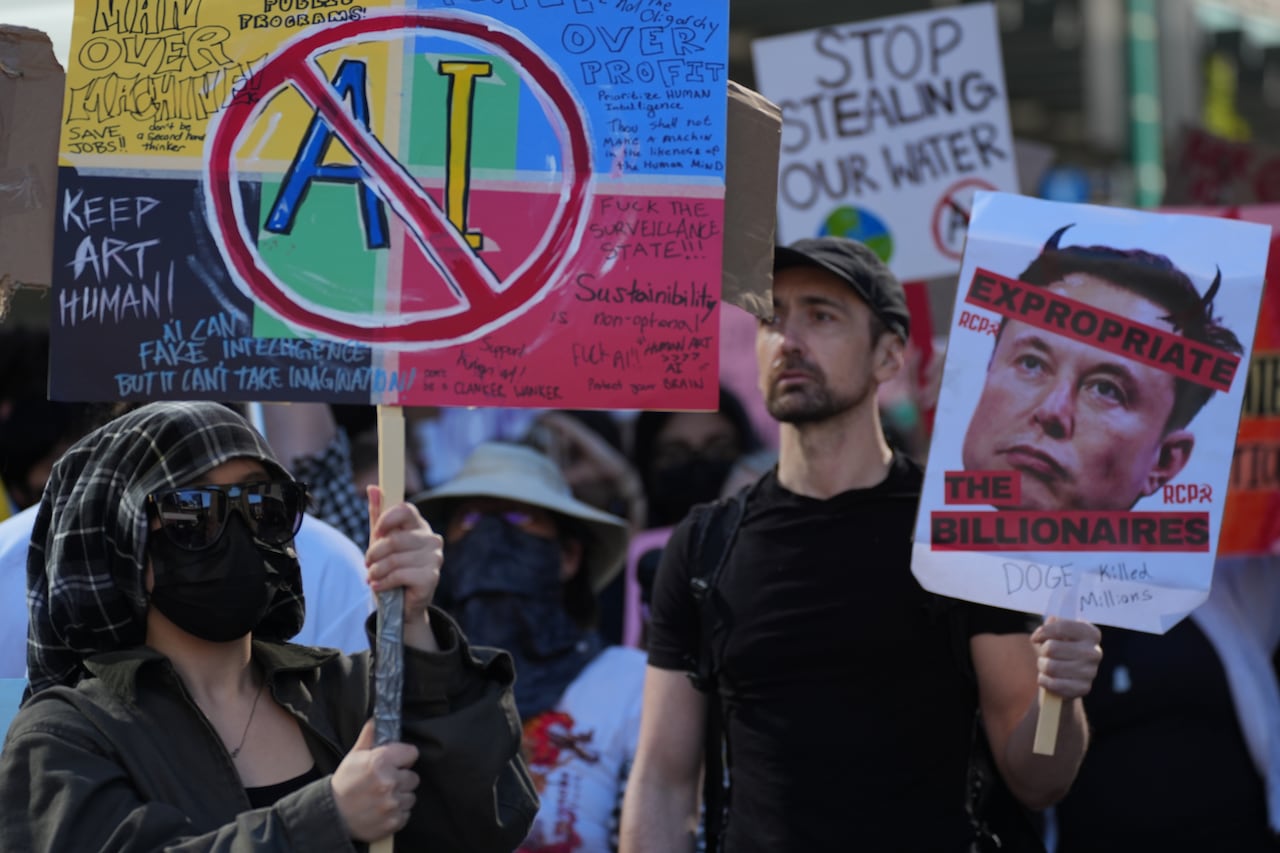
Hundreds have demonstrated in Vancouver this year to contest the proposed AI data centres. (Avery Woods/CBC)
Organizer Guerric Haché believes that public opposition is influencing decisions made by companies like Telus.
“There were numerous protests in the streets, people were sending letters. Stickers were placed all over the city,” he noted.
“There is significant resistance to AI, which seems to be growing. Additionally, there are rising worries about whether the market is stable. Is it a bubble? Is it going to burst? There’s a lot of uncertainty.”
This uncertainty also affects Telus directly.
Quebecor, based in Montreal, has presented a $31-billion acquisition proposal, which would result in a company with a market capitalization surpassing that of competitors Rogers and Bell.
Telus has stated that it is currently reviewing the offer, which will also be assessed by the Competition Bureau and the Canadian Radio-television and Telecommunications Commission.