
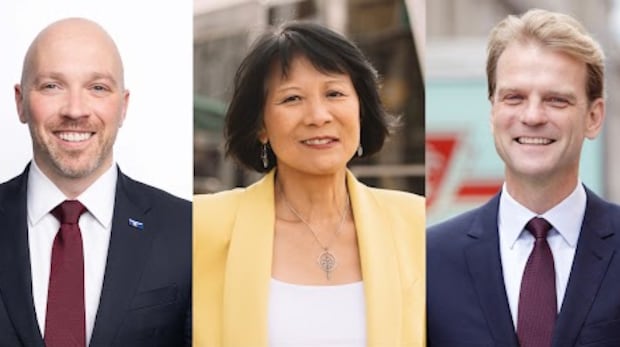

A recent survey indicates that Mayor Olivia Chow is gaining traction among voters who have made up their minds or are leaning towards a candidate in Toronto’s mayoral election.
The poll conducted by Liaison Strategies, a national public opinion research firm, reveals that Chow maintains a lead with 49 percent of support from participants, while Beaches-East York Councillor Brad Bradford follows in second place with 38 percent. Chris Alexander, a former Conservative MP and cabinet minister, has garnered 11 percent support.
In a statement, David Valentin, a principal at Liaison, noted that the poll released on Thursday indicates a slight increase in Chow’s lead compared to an earlier survey by his firm this month.
“The ballot seems to reflect a more distinct advantage for Chow,” Valentin remarked in the statement.
“Chow is in the lead, but there remains a significant number of undecided voters, which keeps the campaign relevant. Bradford’s challenge lies in the fact that while he has real support, it is more limited.”
According to Valentin, the latest poll shows Chow leading Bradford by 11 points among decided and leaning voters. (A leaning voter is someone who initially claims to be undecided but later indicates which candidate they favor, as defined by Liaison Strategies.)
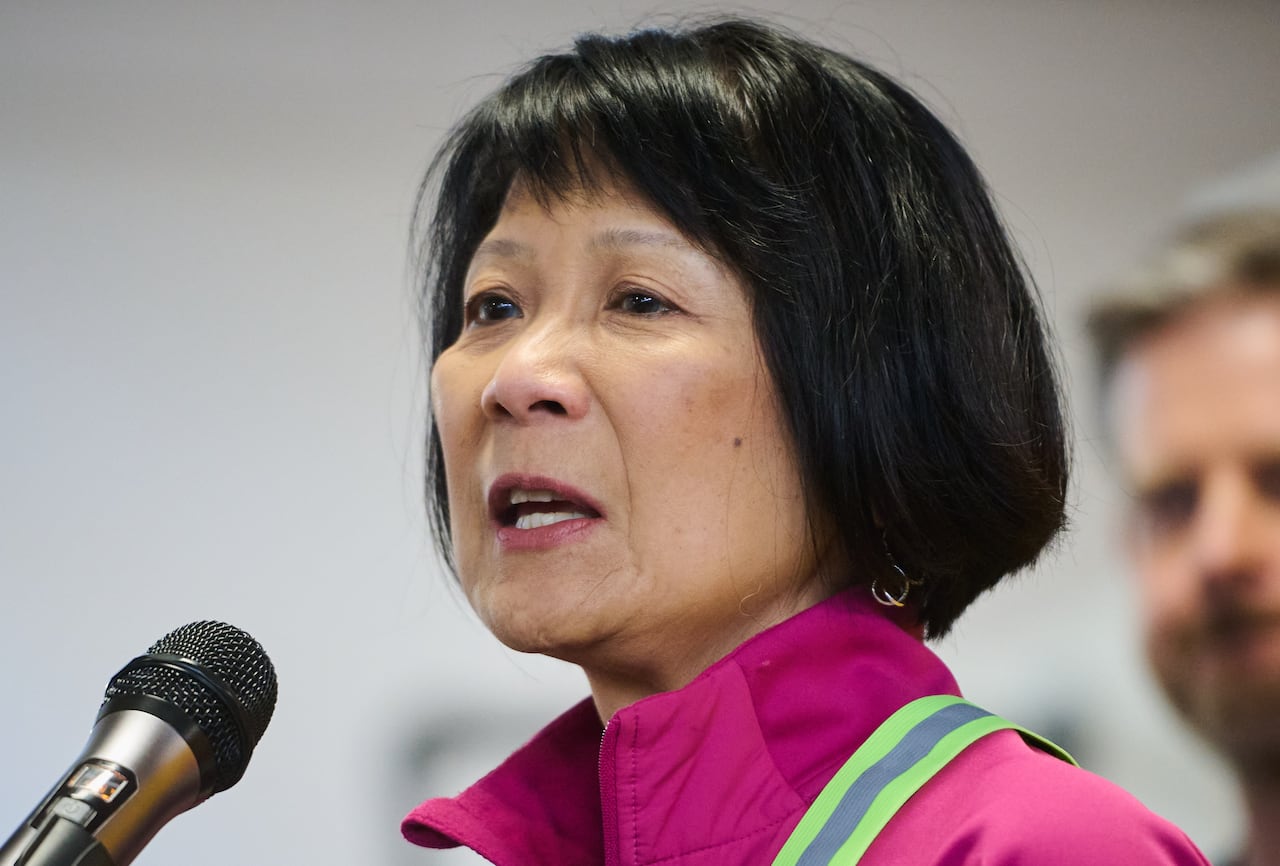
Toronto Mayor Olivia Chow speaks to media at the Daily Bread Food Bank’s spring public food sort in Toronto on Saturday, April 4, 2026. The latest poll indicates Chow leads Brad Bradford by 11 points among decided and leaning voters. (Sammy Kogan/The Canadian Press)
CBC News reached out to all three candidates for their reactions to the poll. Each campaign sent emailed responses on Thursday, but only Alexander’s addressed the polling figures.
Alexander’s campaign stated that the polling indicates more residents are becoming aware of him as a candidate, adding that “approval ratings and support levels are distinct.”
Bradford’s campaign issued a statement Thursday, criticizing Alexander’s mayoral campaign as “the most elaborate joke ever staged in Toronto politics.”
“His slogans and social media posts resemble AI-generated nonsense, quickly produced and never reviewed,” Bradford commented in the statement.
In Liaison’s previous poll from August 7, Chow was at 47 percent, Bradford at 40 percent, and Alexander at 10 percent.
“Compared to the August 7 results, Chow has risen by two points, Bradford has decreased by two, and Alexander has increased by one,” Valentin stated.
This Thursday’s poll shows that among the entire voter base, not just those who are decided, Chow stands at 39 percent, Bradford at 30 percent, and Alexander at nine percent, with 19 percent still undecided.
According to the poll, 52 percent of respondents approve of Chow’s performance as mayor, whereas 42 percent disapprove.
The polling data was gathered from a random sample of 1,000 Torontonians contacted via landlines and mobile phones between August 14 and 16, with a margin of error of +/- 3.1 percentage points, 19 times out of 20. Interactive voice recording methods were used for the survey, and the resulting data was adjusted to align with demographic targets based on the 2021 Census.
Liaison also inquired about respondents’ views on the city’s direction, the significance of bike lanes, the renaming of Sankofa Square, and the mayor’s relationship with Ontario Premier Doug Ford.
48% of respondents believe city is heading in the right direction
When asked whether they think the city is moving in the right or wrong direction, the results indicate that 48 percent believe Toronto is on the right path, while 45 percent feel it is headed in the wrong direction, with seven percent uncertain.
“This represents a more favorable situation for an incumbent than a tie or negative sentiment,” Valentin commented.
-
Chow leads, Chris Alexander up to 10% support in new Toronto mayoral poll
-
Municipal candidate numbers have been sliding in Ontario for years. Will this election buck the trend?
Regarding bike lanes, 65 percent of respondents indicated that a candidate’s position on this issue will be crucial to their voting decision. However, the poll does not provide a clear mandate for the next mayor: 35 percent want an increase in bike lanes, 34 percent prefer maintaining the current quantity, and 26 percent wish for some to be removed.
Responses varied significantly based on location: 49 percent of downtown residents favor building more bike lanes, while only 13 percent support removing any. In contrast, 20 percent of Etobicoke respondents advocate for more, while 40 percent prefer some to be eliminated.
“This highlights a genuine citywide divide,” Valentin observed.
The question arose after the Ontario Court of Appeal ruled on August 14 that the provincial government can remove 19 kilometers of protected bike lanes along Bloor Street, Yonge Street, and University Ave. in Toronto, reversing an earlier court decision.
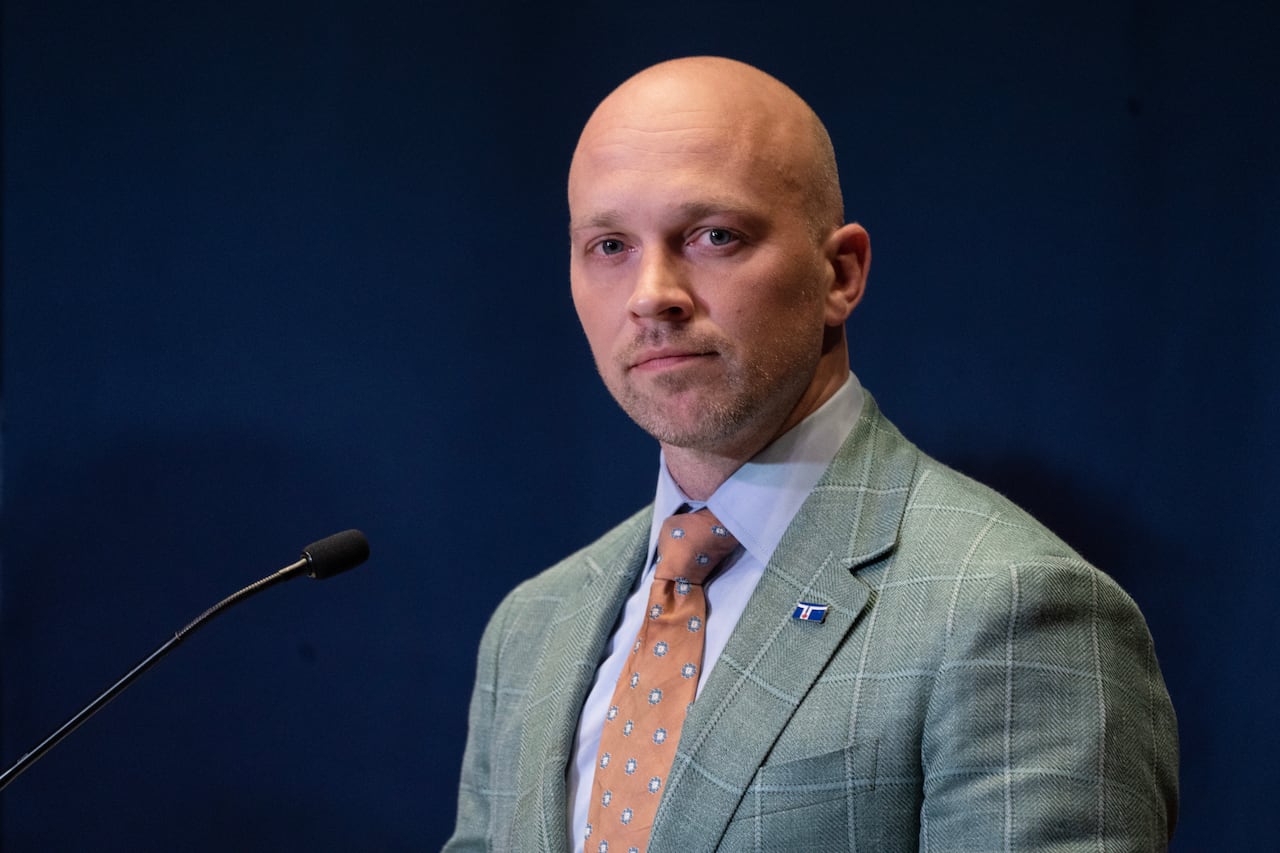
Toronto mayoral candidate Brad Bradford, a councillor representing Beaches-East York, is depicted here. Bradford aims to rename Sankofa Square and remove specific bike lanes if he is elected. (Chris Young/The Canadian Press)
Bradford, for his part, has committed to eliminating the bike lanes on Bloor Street W. from South Kingsway to Resurrection Road if he becomes mayor.
Regarding Sankofa Square, Bradford has vowed to rename it Toronto Square if elected. The survey indicates that 56 percent of respondents favor the renaming, though only 40 percent believe the future name will influence their vote, while 43 percent assert that a candidate’s support for renaming the square would not impact their decision.
Additionally, the poll reveals that voters have distinct opinions on how the next mayor should interact with Ford.
The results show that 48 percent believe the next mayor should seek a middle ground with the provincial government, while 25 percent prefer the mayor to confront Ford, and 19 percent advocate for collaboration with the premier.
There are currently 45 candidates vying for the position of Toronto’s next mayor. A comprehensive list of these candidates is available on the city’s website.