
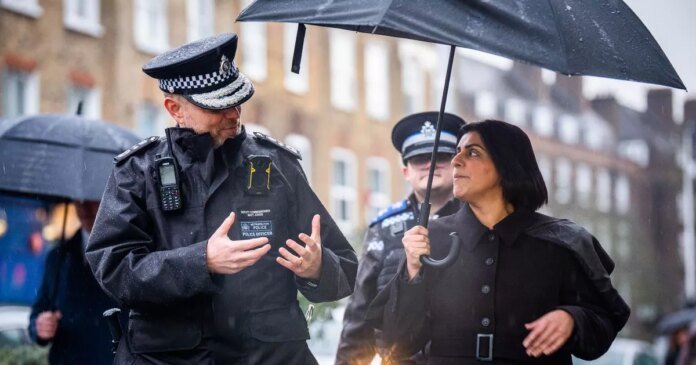

Home Secretary Shabana Mahmood has introduced a significant reform in policing, marking the most extensive shake-up in law enforcement in over two hundred years. Mahmood pledged to overhaul outdated structures, cautioning that current arrangements are setting chief constables up for failure. As part of the overhaul, the number of police forces in England and Wales will be reduced, with the integration of artificial intelligence tools like facial recognition across all regions.
Mahmood revealed plans for the establishment of an elite ‘British FBI’ to handle serious criminal investigations, aiming to enhance the capability of forces in combating local crimes such as anti-social behavior and phone theft. Criticizing the existing policing model as inadequate, she emphasized the need for change, citing widespread unpunished everyday crimes that plague communities.
Highlighting the importance of modernizing policing strategies, Mahmood emphasized the necessity for a more effective and targeted approach. She stressed that current practices are misaligned, with local forces undertaking national policing responsibilities, diverting focus from community policing. The proposed reforms aim to optimize the allocation of resources and ensure efficient policing at both local and national levels.
The introduction of a new National Police Service dedicated to addressing serious crimes, fraud, and terrorism is a key initiative outlined by Mahmood. The initiative seeks to alleviate the strain on officers across the 43 existing police forces in England and Wales, redirecting efforts towards dismantling complex criminal networks through collaborative efforts.
Moreover, the government intends to streamline police operations by reducing the number of police forces significantly, citing the outdated and inefficient structure that hampers effective law enforcement. Regional Crime Hubs will be established nationwide to combat various criminal activities, including drug trafficking, firearms supply, and high-harm fraud, regardless of their operational locations.
Emphasizing the need for swift responses to crimes, Mahmood outlined directives for police forces, including specific arrival time targets at crime scenes and rapid emergency call response times. The utilization of advanced technologies, such as facial recognition tools, will be expanded to enhance operational efficiency and increase frontline police presence.
Furthermore, measures to address cybercrime include recruiting cyber security experts as special constables to bolster efforts in combating digital offenses. The government’s commitment to enhancing accountability and performance transparency within police forces includes the establishment of online dashboards to monitor key policing priorities and outcomes.
In a bid to tackle shoplifting, the government has pledged a significant investment, aiming to address the surge in theft incidents. Additionally, Mahmood announced the discontinuation of non-crime hate incidents (NCHIs) to refocus police resources on tackling criminal activities. The reforms also empower the Home Secretary to intervene in failing forces and enforce higher standards through specialized intervention teams.
With these reforms, the government aims to revamp the policing landscape, ensuring a more agile, efficient, and accountable law enforcement system to safeguard communities and combat evolving criminal threats.