
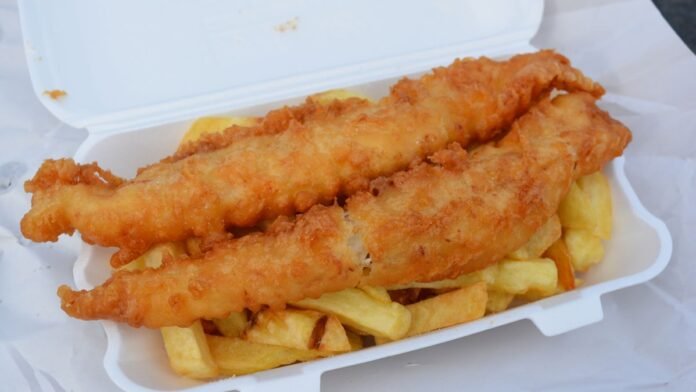

Some takeaway restaurants are allegedly substituting catfish for traditional fish in their fish and chips dishes to reduce costs. Customers ordering a fish supper may unknowingly receive pangasius or river cobbler instead of the expected species. Detecting such misrepresentation is challenging as investigations rely on costly DNA testing and are often intelligence-led.
The Chartered Trading Standards Institute acknowledges that although the misrepresentation of fish in takeaways is not widespread, there are still some dishonest establishments engaging in this practice. Catfish, a safe-to-eat fish commonly imported from South East Asia, is considerably cheaper than traditional cod and haddock, making it an attractive cost-cutting option for businesses.
The potato industry is also facing challenges, with rising prices expected due to the repercussions of the conflict in Iran. Scott Walker, the chief executive of GB Potatoes, warned that these increased costs may not be fully felt until the following year.
The fish and chip shop sector is particularly vulnerable to rising expenses for energy, cooking oil, and fish. The investigation into the use of catfish in place of advertised species was initiated after a Liverpool chip shop owner raised concerns about the deceptive practice.
During sample tests conducted in Liverpool and Manchester, it was found that several chip shops were serving catfish disguised as cod or haddock. The businesses are legally required to disclose the type of fish being served upon request. However, some establishments labeled the fish as ‘normal fish’ or ‘white fish’ without specifying the actual species.
Subsequent DNA testing at Liverpool John Moores University confirmed that three takeaways had indeed sold catfish instead of the advertised species. Professor Stefano Mariani, who supervised the testing, highlighted the prevalence of pangasius, also known as river cobbler, in the samples.
Despite the price discrepancy, with catfish being sold at a lower cost than cod or haddock, distinguishing between the fillets can be challenging for the average consumer. National Trading Standards categorized the mislabeling of fish as a food labeling issue, suggesting that the Food Standards Agency (FSA) would lead investigations into such cases.