

In St Helens, a significant local election is on the horizon, yet the town seems apathetic towards it. Voters will participate next Thursday to fill 46 out of the 48 council seats. Labour has held power since 2010, securing 29 seats in the latest 2022 election. However, they are expected to face a tough challenge this year, as other parties, including Reform UK led by Nigel Farage, aim to capitalize on national issues.
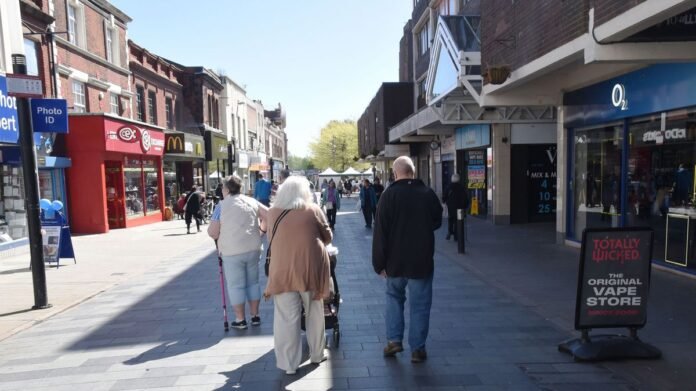
St Helens, known for its historical significance in the glass industry and coal mining, has seen a decline in major industries, resulting in a worn-out town center with numerous closed retail units. The shift towards vape shops, takeaways, and charity stores has replaced traditional establishments. Residents face challenges with the rising cost of living and the allure of out-of-town retail parks with free parking, drawing shoppers away from the town center.
There is a prevailing sentiment that St Helens has been left behind, with little hope that any political party can swiftly reverse the town’s decline. Despite ongoing regeneration efforts, such as the demolition of the old Hardshaw shopping center to make way for new developments like a market hall, hotel, and transport interchange, skepticism lingers among the populace regarding the potential impact.
Some residents feel that Labour has taken their support for granted and become complacent. The upcoming election has not garnered much interest among the locals, reflecting a sense of disillusionment. The challenges facing the town, including job loss and economic downturn, have left many questioning the effectiveness of political interventions.
As the campaign period reaches its final week, all political parties face an uphill battle to persuade the residents of St Helens that they hold the solutions to the town’s pressing issues.