
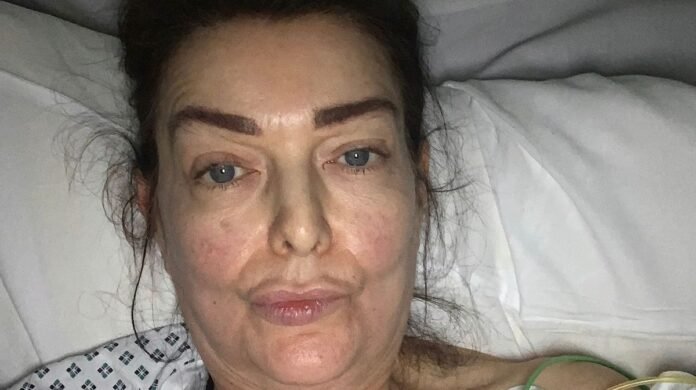

A mother who attributed her abdominal swelling to menopause received a diagnosis of colon cancer after observing “speckled blood” in her stool.
Initially attributing her discomfort to menopause, Natalie Hushin’s symptoms took a turn for the “weird and unusual.” When she began noticing blood in her stool and experiencing difficulty with bowel movements, the 54-year-old sought medical attention and underwent a colonoscopy.
The procedure revealed tumors in Natalie’s colon, leading to a cancer diagnosis shortly thereafter. Following a ten-and-a-half-hour surgery to remove the tumor, the mother from Runcorn, Cheshire, underwent six rounds of chemotherapy.
Now, Natalie is raising awareness about the signs of colon cancer, a prevalent form of cancer in the UK that can also manifest as unexplained weight loss.
Reflecting on her journey, Natalie shared, “The surgery was successful, with the tumor and surrounding lymph nodes removed. Subsequent PET scans uncovered liver cancer, necessitating six rounds of chemotherapy with daily oral tablets and bi-weekly infusions over three months.”
Treatment commenced in September 2025, but a December PET scan revealed a 1cm liver tumor, prompting plans for a liver ablation in February. However, the procedure was postponed, and by March, the tumor had grown to three and a half centimeters, leading to a liver resection.
Natalie recounted, “I am currently going through menopause, so I attributed my bloating to that. Eating would result in bloating and stomach discomfort, but the difficulty with bowel movements and blood in my stool prompted my son to urge me to seek medical advice.”
In June of the previous year, the emotional weight of her cancer diagnosis hit Natalie hard, causing her to experience disbelief, heartbreak, and fear.
In 2022, colon cancer claimed over 900,000 lives globally, according to the World Health Organization. Luckily, Natalie’s cancer was caught early, and with the liver resection completed, she has undergone the necessary treatment to combat the disease.
Despite her progress, Natalie will undergo scans every three months for a decade to monitor for any recurrence. She remarked, “It’s a challenging journey. I was fortunate to have exceptional surgeons for both procedures — I have nothing but praise for them. The second surgery could have been avoided had the ablation taken place as planned.”