
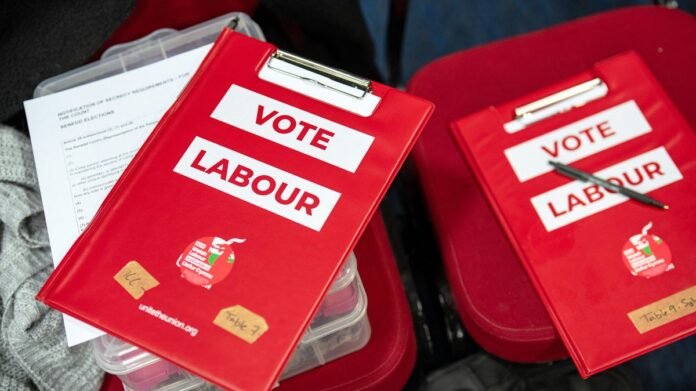

The recent election outcomes are undeniably disastrous, not only for the Labour Party but also for the broader trade union movement and the nation as a whole.
Reform UK has capitalized on Labour’s diminishing voter support, raising concerns that without a change in governmental direction, the country could witness the rise of the most extreme right-wing administration in its history. Such a scenario would likely lead to unprecedented assaults on laborers, immigrants, and the most marginalized segments of society. The responsibility for this dire situation falls on Keir Starmer and his associates.
Rather than fulfilling the mandates that voters sought, the current situation is plagued by a deepening cost-of-living crisis and a series of scandals reminiscent of the declining days of the Tories. Speculation abounds about an impending leadership change, signaling the likelihood of a new Prime Minister sooner rather than later.
While discussions on the timing and manner of Keir Starmer’s anticipated departure may intrigue political analysts and Westminster observers, the crucial conversation that must take place revolves around how Labour can reverse its fortunes and reconstruct itself. To survive, Labour must reconnect with its foundational principles as the party of the labor movement, advocating for the interests of workers and local communities by directly challenging the influence of the privileged minority and prioritizing the welfare of the majority.
By autumn, the incoming Prime Minister must swiftly implement a comprehensive plan to enhance the livelihoods of working individuals. This necessitates substantial investments, to be financed through levies on extreme wealth, to revitalize public services. Additionally, a resolute strategy is required to elevate wages and reduce expenses, enabling people to afford a decent standard of living. A logical starting point would be to restore the salaries of public service employees.
Labour must fulfill its pledges without fail. The commitments made by Ministers to significantly bring public services back in-house and establish a National Care Service need to be honored promptly. As the leader of UNISON, I support those advocating for a change in Labour’s trajectory and rectifying the deficiencies of the current leadership. However, aspiring Labour leaders must recognize that our endorsement is not personality-driven but based on the actions they propose to benefit the working class.
The next leader of the Labour Party cannot afford to persist with the failed approaches of the present leadership. Boldness is paramount, as a timid stance will not be tolerated by the public, who may not grant another chance. Continually escalating expenditure on arms procurement while neglecting the welfare of workers and essential services is unacceptable.
Similarly unacceptable would be further deference to city financiers or treasury officials who aim to deprive workers of their fair share of the nation’s wealth. UNISON represents 1.4 million hardworking individuals, the unsung heroes upholding crucial public services like the NHS. With Farage eyeing a path to Downing Street, it is imperative for Labour to navigate this period with precision. The stakes have never been higher.