
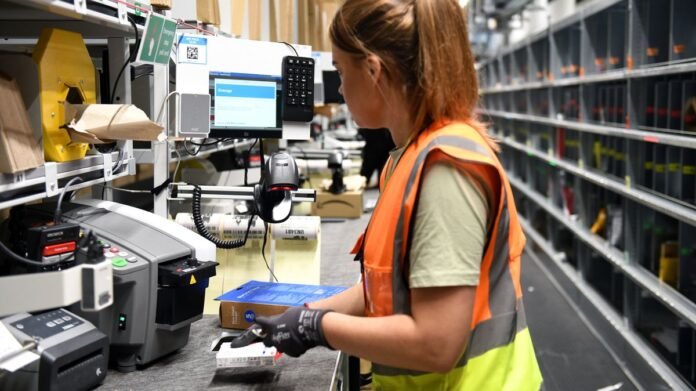

Amazon has introduced a state-of-the-art robot designed to operate across its expansive warehouses. The new Proteus model utilizes advanced technology to navigate areas previously inaccessible to robots, enabling it to handle heavy loads alongside human workers without the need for cages typically used in fulfillment centers. Equipped with artificial intelligence, the robot can also respond to instructions from employees.
While this technological advancement offers enhanced operational capabilities, concerns have been raised about the potential impact on warehouse jobs as automation becomes more prevalent. Reports indicate that Asda is planning to cut up to 1,000 jobs as it integrates automation into its warehouse operations.
The Proteus robot, already operational in 25 Amazon fulfillment centers in the US, is set to be deployed in other countries, including the UK. Amazon’s chief technologist for robotics, Tye Brady, emphasized the collaboration between humans and machines, highlighting the positive impact of robotics, AI, and technology advancements on job creation within the company.
Despite the benefits, questions linger about the potential displacement of certain warehouse roles by robots capable of performing tasks traditionally done by humans. Brady noted that robots could handle “manual, mundane, and repetitive” tasks, hinting at a shift in the workforce dynamic. He underscored the role of technology in enhancing warehouse efficiency, reducing injuries, and streamlining item transportation processes.
Beyond warehouses, Amazon is exploring drone deliveries in Darlington, signaling a potential shift that could affect human delivery drivers. The company’s event, Delivering the Future, unveiled plans to expand its ultra-fast Amazon Now delivery service to Manchester and Birmingham, in addition to London. Amazon Now promises delivery within 30 minutes, with a record dispatch time of just five minutes for a protein bar during the event.