
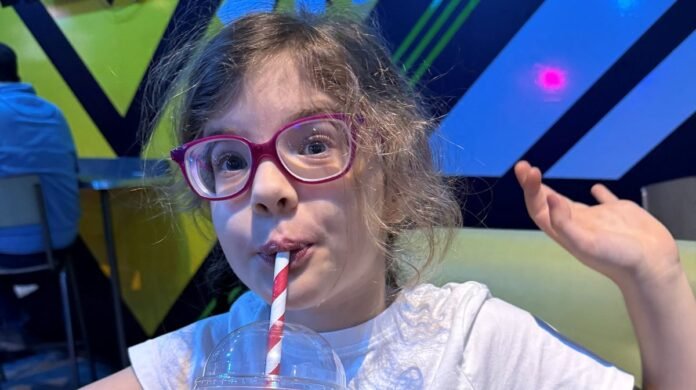

A courageous six-year-old girl has had her vision restored through groundbreaking eye gene therapy provided by the NHS. Little Saffie Sandford, residing in Stevenage, Hertfordshire, was diagnosed with Leber’s Congenital Amaurosis (LCA), a rare genetic condition that impairs normal vision due to a lack of essential eye proteins.
Children with this condition experience limited daytime vision and complete blindness in low light conditions, facing the risk of total vision loss in adulthood. Saffie’s parents identified her vision struggles in dim lighting, leading to her diagnosis at the age of five.
Following tests at Moorfields Eye Hospital, Saffie underwent Luxturna eye gene therapy at Great Ormond Street Hospital, a unique treatment that involves directly introducing a healthy gene copy into the eye. Saffie’s mother, Lisa, expressed relief and gratitude for the treatment, emphasizing its life-changing impact on Saffie’s sight and daily activities.
Having undergone the therapy for both eyes in 2025, Saffie, who previously wore glasses for nearsightedness, experienced remarkable improvements in her vision. Her mother described the treatment as magical, enabling Saffie to navigate daily tasks more comfortably and participate in various activities like trick-or-treating and dining out.
Researchers at Great Ormond Street Hospital and University College London have conducted studies demonstrating the effectiveness of Luxturna in enhancing visual pathways in children with certain genetic eye conditions. While not considered a definitive cure, Luxturna shows promising long-term outcomes, with ongoing research to monitor its efficacy.
Dr. Rob Henderson, an ophthalmologist at Great Ormond Street Hospital, highlighted the significance of gene therapy in improving the quality of life for children with inherited retinal diseases. The research emphasizes the importance of age-appropriate outcome assessments, indicating a potential shift in evaluating pediatric gene therapy trials globally.
The study’s use of pattern visual evoked potentials (VEPs) offers a non-invasive method to gauge visual pathway strength, particularly beneficial for young children and those with neurodevelopmental conditions. The findings underscore the transformative potential of gene therapy in enhancing visual capabilities and herald a new era in pediatric eye care research.